Take 149 - Writer Gary Whitta, Rogue One, See you in Hell

 Apple Podcasts
 Spotify
 Podchaser
 RSS Feed
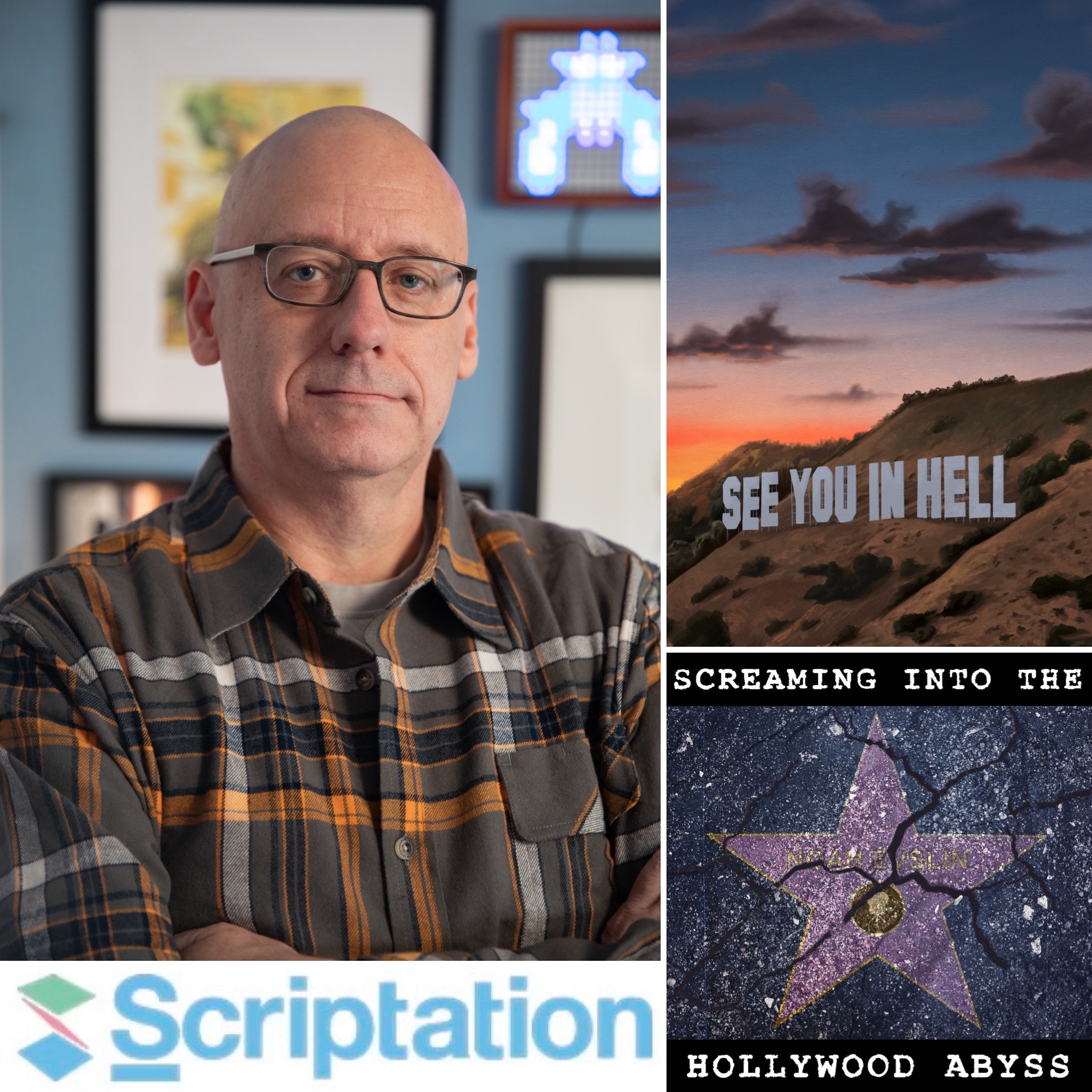
 Rogue One writer Gary Whitta returns to the podcast and we talk…podcasts.
The British writer explains why he decided he needed to make a scripted podcast, casting Jon Boyega and how bad Hollywood is at the moment.
He talks us through where he sees the industry, the process of pitching this show and his views on taking notes.
In his usual witty, sardonic style, we also cover advice for writers, the frustrations of projects falling apart and the joy of creating again.
A very fun, irreverent and insightful romp around Hollywood with one of its sharpest minds.
Check out his pilot at www.seeyouinhell.tv
Any of us who've been in it for long enough, our entire career has been littered with jobs that we didn't get, projects that we thought were gonna go for sure, dozens of unproduced scripts littering the floor.
SPEAKER_01All of us are running into both major and minor failures in Hollywood every single day.
SPEAKER_03For every success, there is months, sometimes even years, of painful failure. This is one of the only businesses I can think of where failure is the default.
SPEAKER_01That's the norm. You have to be able to perservate. Like everything in our business here, it has count and it all bounces off you.
SPEAKER_00That process takes me because that doesn't happen overnight. I was being told by my manager it's yours to lose, and I promptly lost it. And I remember thinking like, well, that's it for me. I blew my one big job. What I've realized from that moment is it's never one big job. There will be other shots.
SPEAKER_03Brought to you by the Emmy Award-winning annotation software scriptation. As ever, I am Dan Rutstein, your non-entertainment co-host.
SPEAKER_01I think in the past we used to have rejection, failure, and adversity in small letters, but I think considering the current environment, our new, you know, thing is rejection, failure, and adversity in big letters. And I am Noah Ebslin, who knows a lot about all three of those things. Uh on today's Screaming Into the Hollywood Abyss, we're thrilled to welcome back Gary Witta to the podcast. You might know him as one of the writers of Rogue One, a Star Wars story, and also the Book of Eli and After Earth, plus other cool things like Star Wars Rebels and the video game versions of The Walking Dead and Back to the Future 2. But on top of all that, he also has a brand new scripted podcast that just dropped this week titled See You in Hell. Welcome here.
SPEAKER_03Hello, thanks for having me back. So look, obviously, it's great to have you back. I remember distinctly from the last episode, the two things I enjoyed most about the episode. Actually, let's make it three. The three things I enjoyed most about the episode is one, obviously, we got to talk about Star Wars, which is something that uh Nara and I and our kids are very interested in. Two, you're British, and I obviously like having British people on here because I think it raises the intellectual bar significantly. Yeah, it was gonna clay just gonna class up the place, you know. Yeah, improves grammar, you know, all the place. Inherently kind of makes everyone feel a bit more sophisticated.
SPEAKER_01A lot of use and ease.
SPEAKER_03Um and then the third part was your um fantastic honesty and candour about obviously, you know, your journey with Star Wars and frankly all sorts of other bits of stuff around the industry. Um you had that sort of slightly belligerent, angry, sort of English approach to stuff that um obviously is very much a trademark of our nation. Um and um the industry now is actually probably, at least from the outside, in as bad a state as it's ever been. So Gary Witter, how are you coping with the industry falling apart with your unique approach to things? I mean, in general, badly.
SPEAKER_02I mean, I think everybody is, right? It's it's it's right. I mean, I I obviously we we you know you probably more than me probably speak to like a wide a wider range of people. I just kind of speak to people like you know in my in my peer group and you know, meet people immediately kind of you know in my little sphere of you know of of uh of work over here as a as a screenwriter. But like anyone will tell you it's bad. It's historically bad right now. Uh these these past three years, uh, you know, pretty much since you know the strike and then kind of what you want to call it, the the great contraction is like what it might be. That sounds like something from the dark crystal, but you know, it's like something that we're going through right now. It's like the there's no money, right? Nobody wants to take any risks, everything's a reboot, and it's just a very particularly if you're a writer, particularly in television, um, it is just it's grim out there right now, and everyone will tell you the same. It's uh, and you know, it's it's something that I, you know, I'm fortunate enough that I have at least been able to keep working and keep a roof over my head. You know, we know that a lot of people, you know, both both during and after the strike were not so lucky. You know, we lost a lot of we lost a lot of people. Um there's just not a lot of work out there right now for writers, for actors, and the work that is out there isn't is you know not necessarily not necessarily that interesting, particularly for someone like me who tries to kind of currency and tries to kind of traffic an image original material, which is something that you know has never had a tremendous amount of currency in Hollywood, but at the moment has less than ever. You know, it's I I've had I've been in meetings where you know they'll they'll just they'll just come out and say it now. They'll say, look, look, if it's not based on IP and and not just like any old IP, but like big IP that everybody knows, like don't don't even bother, don't even bother, don't waste our time. Like there's there's there's there's just almost no appetite right now. Unless you're someone like a you know, so someone like Vince Gilligan is always gonna be able to get you know a show through the system now. But again, even Vince, you know, back in the day, right? What it took him like six years to get Breaking Bad made, now he can do anything he wants, right? Because he has that and Better Call Soul behind him. Um uh and people are gonna want and automatically watch, you know, whatever he does next. But um for the rest of us, you know, it's it's just a it's just a brutal grind. And I had two shows that went out in uh right after the strike, uh and uh shows that you know were like heavily packaged, we had big stars attached, you know, great scripts, you know, everything you would want out of a TV package that you know, I think just just maybe four or five years ago during you know, kind of this boom period where the Netflix was just kind of splurging money on everything, and there was like 600 shows in in you know in production at any given time, you know, that that kind of like that that that boom period. Well, you know, now we're in the bus period that follows, where there is this kind of correction happening where there's much less money. Um, and like I said, five years ago, both of these shows that we went out with, I think probably would be in on like season two or three by now. Uh we certainly would have sold them or got them, you know, got them set up. Um, but as but what we actually got instead was like, oh, we love these shows, we just we just can't do anything right now. Our hands are tied, you know, we're not buying, you know, nobody knows, you know, we're waiting for this new management to figure out what they want to do, you know, because everything's getting sold and moved on and changing hands every five minutes. And there's a lot of uncertainty, a lot of fear. There's always fear, but more fear than ever. Um, and these two shows that I had put a lot of time and effort into, you never expect anything to be a success, but like these two in particular, I thought, man, these we've got we've got a pretty good shot here and and and nothing. And I was so at the end of like basically like all pretty much most of last year, I was like so depressed. I briefly considered quitting the building. I thought I'd just go write books or something because like fuck this, man. I don't want to do this anymore. It's such a dispiriting business when um everything is is is so contracted and so fear-based, like it is right now, especially if you're on the creative side, you're trying to do things that are interesting and you know interesting creatively, and there's just not again, not a lot of appetite for anything that isn't completely safe or kind of pre-proved by uh by another, you know, it's something that's based on a hit book or whatever. It's just very, very hard. And so I fortunately I didn't quit basically because I figured I did the math and figure out I couldn't afford to. Yeah, it's few years before my pension kicks in. Uh so I decided instead to just kind of vent my frustrations into this script. And it wasn't originally even something I was thinking about like showing to anyone. It was really just kind of written for me to kind of vomit my frustrations out onto the onto the page, um, kind of like screenwriting Ipecac. I don't know what you want to call it, but it's like I'm just gonna, I'm just gonna, I'm just gonna like make myself sick. And I wrote this script called See You in Hell, which is basically I don't know how you would pitch it. I guess it's kind of like the studio is probably the closest comp these days, in that it's a show about you know how messed up Hollywood is. This one's a little bit different in that you know the studio is about film, this one's about television, and the studio is very much from the from the top down, right? Because he's it's Seth plays a like at the head of a film studio, right? Like the top guy. This is more from the bottom-up, right? Because it's from the point of view of the screenwriters, and you don't get any more bottom-up than that. So it's uh it's it's it's it was very it's very bitter, it's very, it's again, all of my frustrations, it was just basically just kind of a vehicle for me to kind of vent a lot of my frustrations about the business, like the meetings that the that the writers are in, that those are meetings that I've been in, you know, these are people that I've met. Um, and the the I think the best um uh compliment I got from from other writers that read it was like, yeah, you can tell that you've been in the business, businesses for 20 years, because yeah, I I recognize all these people. I've been in these rooms. You know, it rings. It rings when you do that inside baseball stuff, like you've got to be, you have to actually spend some time on the inside for it to for it to ring true. And uh I'm glad so far that that seems to be to be resonating. But yeah, it's just originally was just my way of wanting to kind of complain about the business, but then we uh you know I wrote and I thought that's pretty funny, and we sent it to like a couple of people on the TV side just to see, but I never really expected anyone to have the appetite to make it, and and so it proved. And I thought, man, I don't know. It's like I just want to make something. I'm so sick of 99% of my job basically consisting of not making things, but asking people for you know their money and their permission to make something. And I just thought maybe I just maybe like I can just do it by myself. Like I don't want to have to keep asking people for permission to make things, I want to just go make something, and so you know, audio is something I've got some experience with. You know, I've done audio productions before. It's relatively cheap to do, so I was able to self-fund it. And I just got very lucky with this incredible talented cast of actors, you know, because again, because a lot of people aren't working right now, there's not a lot of original, you know, television or filming production right now. A lot of actors are just sitting around with nothing better to do. And so I was able to get people like John Balleger and John Cryer and Jonathan Frekes, a lot of Johns now that I think about it. But you know, Shannon Woodward and Tom Sadaski and Alex Winter and you know Paul Schear and all these amazingly talented actors that that in in happier times might well have said, Oh, you know, I'd love to, but you know, I've got this other show that I'm doing. But like most of the actors were, yeah, I'm just sitting around, I got nothing better to do, fine, fuck it. Let's let's do this. You know, they they thought the script was funny and they were happy to do it. They all worked for free, which is why I was able to do it. You know, it's self-funded, otherwise I don't think it would have been doable with with this cast. But yeah, we put it together. We created a 40-minute pilot. Um, you can go to cunhell.tv right now and find it, or just go to Apple Podcasts or Spotify or quote unquote wherever you get your podcasts. You know, it's it's out there now and it seems to be doing well. And it was just, it just clear I I joke about this a lot, but I'm it's actually quite serious. Like I was in a bad way last year with just how grim everything was in the business. A lot of writers will tell you the same. Like, this has not been good for our collective mental health. And just being able to segue into actually making something, even something as like you know, it's relatively unambitious to do it as an audio production, but just to segue into production mode and to talk to actors and to think about how we're gonna record this and how we're gonna make it and actually doing something rather than just having all those second-order conversations about maybe we'll do this, maybe we'll do that, like to go from the theoretical to the real and from development into production, just was such a tonic for me, and seriously did. It was the one thing that last year kind of kept my mental health above the waterline. So, regardless of you know, any whatever success the show may or may not enjoy, it already kind of did what it needed to do for me, which was preserve my mental health, give me a give me a vessel for me to, you know, uh uh vent my frustrations about the business and and enjoy the rare thrill of actually making something in a business in which virtually nothing is currently getting made.
SPEAKER_03I mean it's interesting. I don't know if every podcast episode we're gonna do from now until this all gets resolved, whenever that might be, is gonna be a version of this. But it's interesting. We had we had Craig Thomas on the last episode. Obviously, you know, how I made How I Met Your Mother is a reasonably successful show. Um, and he he's like, I'm gonna write a book about a thing that I know I could never make into a DV show because I want to sort of control my destiny. Um and um I love the fact that you're doing it and imagine one three.
SPEAKER_02I mean, it's it's one it's one thing for me, right? But for someone like Craig, who I think, I think, I I think you're um I think you're underselling it saying reasonably success. I mean like hi, how I'm it was a massive, massive hit, right? It was a huge hit. Um and it was on air for like nine, nine or ten years. That's a billion. If if a guy like that who created a massively successful sitcom that ran for like eight, nine, ten seasons is having trouble getting stuff on the air, what chance do the rest of us have?
SPEAKER_01No, it's that's it's Craig is very um an optimistic human being, and to see him also in this state of being where it's just he doesn't nobody quite knows what to do, nobody quite knows how to move forward. Uh I have a very sort of nuts and bolts question for you. Uh, and it's partially selfish because I'm also working on an audio podcast that I'm just planning on making myself. But you you um you uh talk about writing this project, See You in Hell, which feels you know, obviously very inside baseball that can have its own issues, you know, with your reps going let's do inside baseball and the studio comes out, and like that's the album.
SPEAKER_02And we and we had all those conversations.
SPEAKER_01Sure, we could get into a whole discussion of that. But the um and but of course that's what we all know best, and there is an appetite for it as we see with the shows that do come out. I'm guessing, and I could be wrong, Gary, that you wrote this uh as a standard TV pilot, and at some point you pivoted to um uh audio podcast and an audio podcast, or did you I mean a dramatic podcast, or did you always write this as a podcast? And either way, did that change the writing on the page for you as you envision something that obviously is not meant to be seen but all heard? How did that change your process?
SPEAKER_02Yeah, so it was like there were there were there were a couple of pivots. Like I said, originally it wasn't written with the intention of you know of it being like a piece that would go out into the world at all. It just it was just um uh a way for me to to to complain. It was just a vehicle for me to kind of like again, I really wanted to be out of bitch and moan um about you know, and and try and find some humor in it, right? Because you know it's kind of like if you don't laugh, you'll cry. Trying to find some humor in just how bad things are right now, because they really are. You can't overstate just how bad things are right now in this business. And uh and and the medium in which I am most fluent is screenwriting, right? And so I'll write, you know, I'll I'll write a little script and a TV pilot felt manageable. It was about TV, so it made sense, I think, to write it for TV rather than trying to write a feature spec. Um and like I said, when it when I was done, I felt like it had successfully, you know, been the um uh you know, the therapeutic exercise that I needed it to be. You know, I kind of like read out wrote all my frustrations out into onto the page. But then having then looking at the final product, I don't know, like maybe it's funny, maybe it's good, maybe someone else would enjoy this. I don't know. I showed it to uh Jane Espenson, who's a good friend of mine and you know, one of the one of the most talented and you know seasoned uh TV writers that I know. And she said, that's really funny, you should show it to people. So gave it to my agents, and you know, you you you successfully predicted it. Yeah, oh inside baseball's hard, you know, this might be a tough sell. I said to I I said to my manager um at the end of last year when I heard this for like the 500th time, like I what not even this product, something else. I pick I pitched something else. Like, oh yeah, that's uh that's just really hard right now. I said, you know what, just stop. Tell me what's not hard, and I'll happily do that. Tell me what what is the thing right now that's not difficult? Because I'll try, I'll I'll happily give that a go. And they're like, uh uh okay, so if everything's all equally hard, let's just like just fucking do what you want to do and let the chips fall where they may, right? There's no easy lane right now. There's no shortcut, there's no like, oh, this is if you want to switch over to television or switch over to making this or the water's lovely over here. No, the water is fucking freezing cold everywhere. Like it's terrible, and and and there's like large turds floating in it and sharks and alligators and other unpleasant things. It's just awful. There is nowhere where the water is lovely right now. And so just that to me is at least there's something kind of freeing in that, right? It's like you just get to, you know, if there's no commercial consideration because everything is is is you know outside of IP, because everything is equally commercially terrible right now, you may as well just allow yourself to creatively do what you want to do and not worry about the commerciality of something. Because if you're starting behind the 20-yard line on end on everything, fuck it, right? I mean, that's kind of my attitude. And so maybe I'm my own worst enemy because I always tend to, whenever I write, I always put like some kind of little poison pill in there that's gonna make it the thing that I'm the thing that I might think might make something interesting, like, you know, it's politically subversive or you know, it's it's you know, it's controversial in some way, that which I think makes it interesting is exactly what then gets pulled up as like, oh, this is why we won't be able to sell it, right? And what does that tell you? It tells you that anything that is interesting, anything that is that is potential, especially in our current political age, right? Where everyone's you know threatened, uh terrified to to criticize certain people because you know what's the political backlash going to be, and everybody wants to, everybody's kind of hedging their bets and they're terrified to say anything daring. Um I don't know, to me, I just find that really, really depressing. And again, it's part of what led to me writing this. But to come back from this like very long tangent and go back to your question, the so so that so that first pivot was okay, let's just go from this being a uh you know, just a therapy script to seeing if there might actually be some viability for it. You know, I've written it now, let's let's see. Showed it to a couple of people in television, um, and it was yeah, it was exactly what we said, oh well the studio's kind of already out there. Um it's funny, you know, because like before I actually wrote this long before I even knew the studio um existed. And I mean, I think I think at that point, obviously it was well in a production, but before they had announced it, before I knew anything about it. Um and at the time I was thinking, and when I told people about it, it was, oh, well, you know, it's really hard because like no one makes those anymore. Like nobody, nobody wants to make an inside baseball show. And then Seth comes out with the studio, which is a big hit, and then suddenly the argument is, oh, well, you see, there's already the studio now. So it's like, what so which one is it? Is it that no one's making these shows, or is that that or is that people are or is it that other people are making them? And now there's no room for any it's it's it there's always there's always an excuse. And I'm honestly agents and and and reps and execs, they're so good at finding a million different reasons to say no, because it is their default mode, right? Because it's a fear-based business. You cannot get fired for saying no and being wrong. You can only be fired for saying yes and being wrong, which is why no's always the default, and it's that much harder to get them to a yes, again, especially with original material. And so the second pivot was really like we were gonna continue to send it out to TV producers, like, you know what, guys, just stop. Pull it, pull it back in, run it back, let's let's start over. Uh I because I I'm just every time you get another rejection, another pass, it's so fucking depressing. I thought I'm not gonna, we we already know that Dextack's against this, like, no one's gonna make it, let's just not collect any more passes. Um, and it sat there for a minute, I didn't wasn't quite sure what to do. And then I don't know, at some point I had this idea of um originally I was just gonna like post the script. So no one's ever gonna make this, but enjoy, you know, you can read the script, whatever. Who cares? Um, but then I thought, I don't know, maybe we can do something a bit more ambitious with it. I I did I do have a lot of bit of um uh uh experience in audio production because I self-produced the audiobook version of my my uh novel that I um published a few years ago uh and learned a lot about you know kind of like homebrew audio and and applied that to this. Uh and again started calling actors again and and got very again, got very, very lucky with some of the casting here. Some of these people are friends of mine from you know, I'm known Frakes and Boyager and Shannon and some of these people for a long time. Other people were literally just people I cold called, like John Cry from Two and a Half Men. I I I we follow each other on threads, and that's it. And I sent him a DM saying, hey, listen, I know you don't know who the fuck I am, but do you want to read this script? And he read it. He said, Hey, it's funny, I'll do, I'll do whatever you want. Again, I'm not doing anything, I'm just sitting around. I've got a recording studio at home because that's the other thing. Post-COVID, all the actors now, pretty much everyone has a little recording setup at home for you know, self-tapes and auditions and voiceover work and stuff like that. They all went out during COVID and invested in you know a decent microphone and a camera so that they could do these, um, do all this remote work. And uh so some of it was recorded in a professional studio, you know. I mean, it went down to Burbank into New York and got Shannon and Tommy our two leads in a studio so we could get the best quality audio. But for others who, you know, we weren't able to get into a studio or you know, just not um uh you know in a position to do that, we recorded from home and we spliced it all together. You know, a lot of it was just done over Zoom. It was very kind of you can go to my YouTube channel, there's there's a there's a behind-the-scenes video um actually at CUNHTV as well you can kind of see how we made it a combination of like uh uh splicing all these actors that recorded in like three different locations into the same scene, which is more difficult than it sounds when everyone's recording on different equipment and then you have to like do all the volume mixing and all the technical stuff. It's it's interesting but hard work. Uh but we have it we eventually got there. My my uh ambition for it was always like even though this is like a completely homemade production, I did most of the editing and sound mixing myself in Garage Band, taught myself to use Garage Band for this uh with a little bit of outside help. But I was like, even though it's being made for almost no money, I don't want it to feel that way. Like people should listen to this and feel like, oh, this I could have got this off Audible, you know, or you know, um, you know, one of the, you know, this feels like a like a proper professional production. And in the end, I think it is, you know, I spent a lot of money making sure that it does sound that way. You know, we license music, you know, again, we use professional equipment. I had a professional sound guy go over it and kind of clean up any any little audio gremlins. It sounds really good. And so um, those were kind of the two pivots from just like fuck it, I'm writing it. I'm just gonna write this just to you know vent my spleen to well, let's see if there's any viability for it, to okay, there's clearly no viability for it, but let's do it myself anyway. Those were kind of the two main pivots.
SPEAKER_01Well, uh uh so you and and so you so you have another choice here. And normally we would have done our homework a little bit more and listened to this podcast and be able to speak more eloquently about it, but it just came out. So we are we are sort of right on the edge, you know. This is a brand new hot project that I have um a lot of questions about. Um the only person who's ever given me advice, and I'm gonna give him a shout-out because he calls us his uh us his third favorite podcast, and maybe we'll get up to a second favorite podcast, is Paul Begg, who's done a lot of audio dramas, and uh you know, you have a choice right now, and this is uh you know information I got from him as well, right? When as you're making your podcast and you have this really great cache lined up to just make it like you did and put it out there, uh, and or go to a company like Audible or Spotify and try to sell it to them. The last second, pre-packaged, uh, and they might have, you know, funded the entire thing. What was your decision process just to say, fuck it, I'm doing this myself? No, no outside people.
SPEAKER_02I mean, it was it was really kind of liberating, actually, once, once you transition to that, because you know, I'm the boss, right? I always say this, yeah, one of the nice things about doing things yourself um uh is is A, I just in in just in terms of getting it on stream, right? You don't or getting it up and running, you don't have to ask for anyone else's permission, right? You just have to decide, you just have to decide that you're gonna do it, right? And then hopefully find other find people who will collaborate with you and you know have enough of a budget to be able to, you know, make something decent, right? And this the this this you know, this was self-funded and it wasn't like super cheap, you know, it cost me several thousand dollars to make this. And again, the only reason I was able to make it at all is the actors you know all volunteered their time for free. For me to for we can talk about it, but like for me to do like a whole season of this would would cost considerably more because I could not and would not ask them to come back again and do this all for free. Like they did this as a favor to me as a one-off. If I were to do a whole season, then the budget for that, the like the top line item would be paying the actors, you know, what you know, their fair rate, right? Not just studio time and everything else that we paid for on the pilot. Um, but no, so originally it was like, I'm gonna make it myself. And then towards the end, you know, there was some discussion about, well, should we take this to Audible? Do you want to, you know, my agents are like, you know, do you want to try and sell it? And I kept coming down on the side of like, no, because by that point we had produced the show, right? And we had made it, and it was so nice, A, to be able to wake up every day and go to work, not worrying about is the next phone call that I get gonna be one where they're firing me or they're canceling the project. Like that, that's the kind of that's the kind of, you know, that's such a constant fear in this business for writers that, you know, we walk around with that all the time. Now they're like, when's the other shoe gonna drop? Like this kind of low-level anxiety, like, when's it all gonna go wrong? When's it all gonna go wrong, right? Because I'm not really in charge of my own destiny. There are other people who are holding the purse strings, who are making the decision who are basically hold my fate in their hands. And when you decide to do something your else, uh else and you don't owe, and you're not working with anyone else's money, just your own, um, no one can pull the rug out from under you because it's your fucking rug. You own it. It may be a very cheap rug, but it's yours, right? And no one could pull it out from under you. And so I was able to, I was able to see this all the way through, knowing for sure that it would find an audience because no one can fire me. And once it's done, you know, it's relatively easy to put it into a podcast, you know, system and and press, you know, launch, right? Uh and I've got and I'm also fortunate enough that I've got enough of a, you know, of a of a of a of a career history and a social media presence that I can, you know, get people to pay attention to it. You know, I can I can draw people's attention to it. So for the for that reason, I really I had enjoyed like the kind of the and also by the way, no notes, right?
SPEAKER_01That's what I was gonna say, no notes, like no notes.
SPEAKER_02No notes. I this is that was kind of my petlop. It was like the studio, but without any notes from the studio. Um, and so because I love the studio, but you can kind of tell why like they you can kind of tell where they felt like they needed to, you know, pull their punches because at the end of the day, you know, it's a corporate show and Apple's running it. Um, but when it's just me, we can make jokes, you know, calling Larry Ellison an asshole. And you know, we can, you know, we can do whatever we want. I mean, it may end up fucking my entire career. I don't know, man. I'd probably never work at Paramount again. Uh, but you know, I I just wanted to be able to kind of be completely unfiltered and not have anyone telling. I remember thinking, like, towards the end, my my agent who who listens to the show was like, you might want to, you might want to think about not doing this joke if we ever if you ever want to work at this studio again or whatever. And like, I think like had this been, had this been sold to Audible or whatever, I thought those notes would may have been presented to me as like, you know, not just advice, but instructions, right? You're going, you, you're going to take this joke out. And I just didn't want to have those fights. Uh, and so, and so the only way to kind of continue to enjoy that kind of autonomy and not having to worry about, oh God, what's this phone call gonna be? You know, am I fired? Is this, you know, they don't like the new script or whatever it might be? Because there is no one on the other end of that phone, right? There's no, there's no one that can call me. And so that just felt so liberating and so freeing that I just thought, no, yeah, I don't want to sell it. Like, let's see how it does. The current plan is, you know, we'll we'll see the numbers so far for the first 40 out 48 hours are very, very encouraging. Uh, but we'll see how it continues to do. Obviously, right now it is just the one pilot episode. The idea is if we get over like you know, seven or thirty days or whatever the kind of the viability window is, the show the pilot episode demonstrates that there's an appetite for more episodes of this, then crowdfunding is the only way I would do it. Because I can't pay for it all myself. But I'm also, again, I'm not gonna take corporate money because again, as soon as I do that, I don't own it anymore. And I'm gonna, you know, you just don't have that sense of like I can say whatever I want. And so crowdfunding, I I think is probably the most viable way that there would ever be more of this show because that way I can afford to pay for it. But again, there's no, you know, there's no there's no one person that can tell me what to do once you, you know, that there's it's it's just it's just incredibly freeing and liberating. And again, whether or whether or not it was the wisest thing to do to launch, you know, a script that takes a lot, you know, it takes a lot of shots at you know, people and entities in in Hollywood uh without any kind of filter at all. And then and anytime somebody would say, Oh, I don't know about this joke, I'm like, well, it's definitely going in now, like doubling down on it. I just there was something gonna really kind of you know fuck you about it that um you know, I think that is my idea was like that was hopefully that was gonna be kind of like why it would get attention. Like people say, Oh shit, like they went there. You know, he said that, you know, things that you wouldn't normally again, like in a full-on TV version of this or any kind of version of it where it's like, you know, uh the there's a parent company kind of ultimately, you know, exercising editorial control over, you know, they like this joke or they like that joke. The the the the show would not have gone out in its current form, right? The the the show that you can go and listen to right now only exists because there was no one telling me not to put in this joke or that joke. And again, whether or not that is for the best, whether whether or not that makes it funnier, whether or not that helps me or hurts me, I don't know. I just know that it was really, really nice for once to be able to be my own boss in, you know, in a in a you know all the way through production.
SPEAKER_03So I was gonna ask you what like the plan is for it next, and obviously you've answered it, and crowdfunding does seem, given the freedom you're enjoying, probably the right answer. So my second question was going to be um what do you think this all means for you in the sense of um uh no one quite knows how long all this is gonna go on for in terms of the industrial disruption and all that sort of stuff? Is this a sort of this is gonna keep me going for 18 months until you know actually I can go back to pitching things the old way and I'll go back and make something? Or do you see this as not so much never recovering, but from where you sit, do you see yourself if your agent called you tomorrow and said, you know, you we want you to work on another feature as part of some kind of you know existing IP or franchise, you just go straight back into it. Or do you do you think the way everything's gone over the last couple of years, you are you are fundamentally changed as to how you want to approach and engage with the industry going forward?
SPEAKER_02I mean, I think we're all I think everyone, everyone who's paying attention, if you if you haven't been fundamentally changed, if you work in this business and you haven't been fundamentally changed by the events of the past couple of years, you have not been paying attention, is all I can is all I can say about that. And every every I don't know anyone who's again, writers who are far higher on the totem pole than me, like you were talking about Craig Thomas. I obviously know people more on the feature side, but writers who have got way, way better feature resumes than me, people that have written like major, major hit movies over the last couple of years who are saying the same, dude, it's not just you, it's shit everywhere. Like everyone's having a hard time right now. And so it I think everyone is looking at different ways to do things. There is definitely an emergent trend. But one of the things I think is kind of interesting about the show right now is that you know it's very meta, right? The medium is the message. The show is the show is about the fact that the industry is fucked right now, uh, but it and it was created because and it was created because of that, right? I I was forced to make it this way because it was no other way. I was forced to make it this way because it was inspired by the fact that the business is fucked. And this and and in a fucked business, this was the only way to do it, which is like figure out a low-budget way to do it myself. And it does, you know, just from kind of looking at the trades and talking to people and seeing what's out there, it does kind of feel like there is increasingly uh kind of a this kind of indie gorilla, you know, fuck it, let's just do it ourselves type mentality. You know, I I think I think more people are kind of finding ways to go around the traditional gatekeepers, um, and and just and you know, even if it, even if it's in a very kind of low budget, inauspicious way, just make something. Like making making this low budget project, this low budget audio project was instant was immediately more satisfying for me, you know, writing eight drafts of a of a of a triple A, you know, IP mega franchise movie, and then getting the sack and replaced by eight other writers, and then the movie comes out and it's shit. You know, like there's there's I I've done both of those and I prefer this. I prefer doing this.
SPEAKER_01So what do you what do you do? Um I mean, this is this is sort of piggybacking on Dan's question, but also very much your words are echoing in my head uh uh Gary as we all navigate this tricky next part of our all of our careers. So you you're still in the business, you have humongous credits, you can still obviously package a project with the best people in the game. Your agents might have a plan for you, which I don't think is you put making you know self-producing audio dramas. So what like how do you bridge that gap? Like you said you have three more years before you retire. You m are you going out for things? Like what do you what how do you what do you one for them, one for you?
SPEAKER_02Yeah, I mean, I'm still, you know, I mean I I am, you know, again, I I I I always when I complain too much, I always remind myself that I actually do have the luxury. I'm still working, I I'm I'm doing a I'm doing a uh I have an original um science fiction piece that I that I sold last year that I co-wrote with Eric Heiser um uh that we're working on right now. That's actively ongoing. Um I just finished a major video game adaptation uh for a for a major studio. I I I'll still I'm not alert as soon as it's not like you say IP and go, ugh like Star Wars. I didn't go like IP, I went, oh my god, Star Wars, you know, because certain things, it's uh it's a privilege to be able to play in those sandboxes. And now other there are other IPs out there, you know, the uh if it came across my desk, I'd be thrilled, right? But it's it's it's just it's it's it's not the IP stuff in itself, it's just the fact that it's so dominant right now. And it's it's all that's out there. It's all that's out there, and it's and it is depressing, um, and it is very much a sign of the times. Um and yeah, I'm still actively working. Part of why so the other thing about Steven Hill is aside from just wanting to bitch about the business, I really wanted to just see if I could write comedy. I wrote a piece, um, uh a TV pilot last year that wasn't in wasn't intended to be comedic, but it ended up kind of that just you know sometimes I feel like stories take on a life of their own and they tell you what they want to be in the telling. And this and this story, which originally was written as a very kind of dark dramatic piece, just kept nudging me towards comedy. Right. I genuinely do believe this. It sounds silly, but I think like a a story is a thing that has its own life and it has its own personality and it will, it kind of becomes its own muse and it will tell you, like I said, I think stories as they emerge will tell you what they want to be. They want to become something, they want to go in a particular way. And if you listen, if you pay attention, um, you know, you should all you should you should always listen to the story, what the story is telling you. And if you find yourself writing jokes in something that you didn't expect to write jokes into, there's a reason for that, right? And that that to me is telling you that the story needs it, that it needs that comedy. Uh, and I ended up writing a lot of comedy into what this, what, what what was originally was a very dark dramatic show, ended up kind of more of a hybrid, I guess what they call a dramedy or whatever these days. Um, and what I took away from that was, man, I really actually really enjoyed writing the comedy more than the other aspects of it. And so uh this was an attempt to write just a pure comedy, because see you in hell is like just straight up like the first thing I've ever written that you would just put in a comedy bracket, you know, without any other, you know, uh modifiers. Uh so it's really just an exercise in can I write comedy? And then when we when we did initially send the show out, it was less about having an expectation of selling it, because there's almost no expectation of selling anything these days. Uh, but it was more about, well, let's just educate people about the fact that I can write comedy now. This is actually one of the reasons why I broke up with uh UTA last year, is that their their advice to me was to not try to branch out into comedy, but to just stay in your lane, basically. Like write, you know, just keep writing genre stuff. I'm like, is it really that difficult for people to understand that you know I can pat my head and rub my stomach at the same time? You're like, I I write science fiction and I write comedy. Like, is that like why can't people get their heads around that? I didn't understand it. And so um I really wanted to, I really wanted to pursue writing the comedy stuff and see you and how it was originally, if nothing else, just well, let's just send it out to people so that they'll think, oh, yeah, there was a lot of like the Star Wars guy wrote this, you know, because there was a bit of a surprise when you when you pivot like that. Uh, but people get it now. I interesting had another, it was almost like starting my career over again where we did a butt a bunch of like generals, people that I'd never met before. Because like, you know, the legendaries and the bad robots of the world, I know all those guys. But like I don't I don't really know, you know, comedy producers as much. And obviously this is a script that's going to people that don't know me as well, or they only know me might be credits. And so it did kind of open up another front for me. And if nothing else, you know, maybe the next time there's like a comedy project out there, somebody might think of me because of this in a way that they wouldn't have beforehand. So, you know, if it has any application at all, this piece, it might just be as like a comedy calling card to demonstrate that I can do comedy as well. Uh, whether or not I'll have a life of its own beyond this pilot episode is a is another question. But um, yeah, that was the idea really, to like just try and open up another another front. And I asked, I as much as I bellyache, yeah, I've still got to work in this in this business. I can't, you know, I can't afford to do anything else, right? This is the only thing I'm qualified to do. Uh and uh it's the only thing I'm ever, you know, what do they say in uh in heat? I don't I don't know how to do anything else. I don't much want to either, right? And so that's kind of where I am, and you know, like I said, this was this was a uh just kind of a palette cleanser for me. I definitely felt better after writing it, and I certainly felt a lot better for having made it and just put something out into the world. So again, you say that you go, Gary, you've got these amazing credits. Yeah, yeah, I I'll give you an amazing stat. I haven't had anything produced in 10 fucking years. Ten years. And I've it's not I've not been working. I let me ask me how much I've written in that time. And this is what's so depressing about being a screenwriter is like 99% of the work that you labor over will maybe be read by a dozen people, you know, like the studio execs and the readers and the people that are involved in the project, and that's it. Think about that. What do you think it's like to work for six months or a year on something and to put your heart and soul into something creatively that maybe 20 people will ever read and ultimately they all reject and they ultimately they all rejected it? It's just it's you know, for a lot of people who get into this business get into it because like we're we're sensitive, delicate little souls, right? We're artists, we've got artists' souls, and we're our feelings are easily hurt. We're sensitive, we feel things, we're human. And so when these and so when these projects, which are all like our children, that are all like labors of love, go out into the world and are stillborn, it's it's heartbreaking every time. And you know, it's uh you gotta have a thick fucking skin to be a creative person in this business, and you know, we we all handle it in in different ways, and I guess the way that I've decided to handle it after 20 years of getting kicked around is to make a show about how I've I've had enough. Well tell us how you really feel, Gary. One of the things that I did in the show was that I again I know you haven't listened to it, but the premise of the show is basically to there's a there's a show within the show, right? Like a fake show within the show called West Palm Beach, which is this very glitzy kind of telenovela uh Yellowstone meets dynasty type, you know, uh soap opera that it basically is in in the fictional world of the show, it's Netflix's biggest hit ever, right? Bigger than Stranger Things, bigger than Squid Game. Frakes, by the way, in the show, plays Ted Sarandos. He plays the CEO of Netflix on the show. He's very funny. Um, and the idea is the two creators of the show who are this married couple, get divorced, can't work together anymore, and so the show has to go away and they go off and they make their own rival shows. But what was fun about that was by having them come off the back of this massive, massive hit, you know, the kind of show that every writer dreams of having, you know, like a Duffer Brothers level. Like the Duffer Brothers, right? Can do it. Right now, the Duffer Brothers, but they can do anything they fucking want, right? Because they're the guys that made Stranger Things. They're one of the few people in the business that can that can pretty much say, we want to do this next, right? And it'll and it's gonna happen. Very, very, very rarefied air that you're breathing, you know, coming coming off the back of a of a Squid Game or a Stranger Things level mega mega hit. But that's where these two characters are. Uh, but at the same time, they're also very jaded and jaundiced about the business because they've seen it all, right? And so to be the the way that these characters, the the the meetings that you see them in are meetings that I've been in, but the they're able to approach it very differently because, again, they have more money than God, right? They can just go live off the residuals from the show for the rest of their lives if they want. They're super, super rich. They don't need to do another job. Everybody wants to work with them, everybody wants to green light their next show, but they don't need to do it to do anything. And so the ability to just be able to like walk to walk into a meeting and say, eh, I don't want to do that. And you know, to not have to fake it, to not have to pretend to be interested in every shitty idea that they pitch at you, to be able to just kind of like feel like you don't need to play the game anymore. You know, there was a little bit of fantasy wish fulfillment of like, what what it what it what would it be like to be to be in that position where you are so hot you're coming off the the the hittest, the the biggest hit show that's ever existed in television, that you can do whatever you want, what must that feel like? And not just in terms of like the recognition or anything like that, it's more just about being able to not give a fuck, to have that kind of Larry David attitude, right? Larry David's my hero, right? And part of the reason why I love uh Kirby Enthusiasm and the and and what he was able to project in that show, he's yeah, he's playing himself, right? Made $300 million on Seinfeld, doesn't need to impress anyone, right? Doesn't need to play the game, doesn't need to say what you expect him to say. He's just gonna tell you what he thinks. And that is and that is a privilege, that's an earned privilege that comes from coming off the back of some of the, you know, having made some of the biggest comedy successes of all time. And I kind of feel like creating like a Stranger Things or a West Palm Beach level mega hit for me is a fantasy, not in terms of like enjoying the success of the show, but just being able, but just be just being able to like not be smug about it, but just be just you know, it's so nice to kind of breathe that rarefied air and know that you don't not even be able to do what you want, but just like just not have to play the game for a minute and just sit back and go, you know what, I'm over it. I don't, I don't, I don't need to pretend to want to do the rock and sock and robots movie anymore, you know, or whatever, or whatever shitty idea is you've got for me this week. There was a there was a little bit of that of just like of just wanting to kind of um imagine how cool it must be to kind of enjoy the level of success where you're just treated very differently to, you know, kind of middling writers like me that you know get kicked around like junkyard dogs. Um I just kind of wanted to just kind of wanted a fantasy roleplay being you know a Duffer Brothers level, you know, hit for five minutes. It was fun just to kind of live as Dan and Gail Bellingham with the showrunners on the on the show, just to kind of live in Dan and Gail's shoes for five minutes as you know, coming off the back of this mega show where everybody wants to work with you and you know, and being able to kind of say, Yeah, I want to make a show about the Irish potato famine next. And they go, Oh shit, well, like we would never usually do that, but because it's you, we kind of fucking have to, right? Like that, I just it'd be so fun to be able to enjoy it. Obviously, you've got to earn it, right? You've got to create that mega show, right? Vince Gilligan never gets to make Pluribus unless he makes, you know, Breaking Bad and Better Call Soul First, right? But he did. He created two mega massive shows that are both fantastically good and fantastically uh commercially successful. And so he's earned the ability to say, yeah, I want to make the batshit show next, right? That's that's the real, those are the real riches in this business, I think. Not the residu, not the residuals, but to be able to say, yeah, I've got an idea for a guy, you know, and and just it's again it's the kind of thing where like, and if anyone else is pitching it, they're fucking they're pulling the trapdoor lever right under you, like halfway through the pitch. Uh, but you know, to get to that kind of Vince Gilligan Duffer levels, Duffer brothers level is like, I've got this idea that like 10 years ago I never could have pulled this off, nobody would ever let me do this, but now they kind of have to. I think that's kind of very cool.
SPEAKER_03So look, um unfortunately, Gary, we're very much nearer the end of this podcast and the beginning. Oh, I gotta pick my kid up from preschool anyway, so we're we're good, we've both got hard outs. So um look, we always ask, and you'll remember this from the last visit that we ask a final question of you know what a piece of advice. I guess I I probably know your answer because you've just done it, but what piece of advice would you give to somebody who is actually very successful in this industry, but the industry is falling apart? What would you what would you tell them to do?
SPEAKER_02I mean, if they're very successful, they're again that your level of success right now in this business is going to insulate you from just how bad it is, right? I I don't have the level of success in this business to be fully insulated aga you know against everything bad that's happening. I'm I'm grateful for any work that I can get. You know, the the Chris Nolans and the JJs and the Duffers of the world, you know, that's again, that's a very that's an elite group, right? And those guys don't have to worry. Again, that they'll they'll always be able to kind of do to some extent what they want to do. But for almost everybody else, there's I mean, what can you do? Keep your head down, you know, you know, try to stay out of trouble. You know, if you make you know you can make your own thing, you know, it's it's the whole idea of like, oh, just get your cell phone and go out there, and you've got a movie studio in your pocket. That used to be advice that we give to people that like hadn't broken in yet, right? Now it's like you, it's like you know, triple A filmmakers telling that, telling each other that, like, uh fuck it, just go just get your iPhone out and go make it yourself. Right. It's like because because, you know, even people that have really good track records and really good credits in this business, uh, I at this point, the the There just isn't enough fat on the bone. There isn't enough meat on the bone in this business to go around. Right. And what is there is going to go to the top, top creators who have proven successes. Um, and so for the rest of us, you know, it's it's like take, you know, take what you can get. Try not to complain too much. I should probably take more of that advice myself. Um, and again, it you you can make your own stuff. CUNHEL is is a good is a good example of that. Like I said, whether anything comes of this, who knows? I don't know. I just know that it's already mission accomplished for me because this was this was the most powerful antidepressant I've ever I've ever taken. Uh, was was was being able to make this thing and put it out into the world and to realize that I don't need to ask anyone's permission to make things was was a revelation for me. Uh and whether or not I'll do more like this, I don't know. You know, this thing's brand new. We'll see how this one goes first. But I'm very proud of it. It's very funny. Um, I think it was a success a successful experiment in um proving to people that I can that I can and do enjoy writing comedy. Uh, but yeah, it's like I don't know, just I I I'm trying to think like I've been struggling, right? It's like why ask me for advice? I don't know what the fuck I don't know why are you asking me? I don't know what the fuck I'm doing either. Nobody knows. Nobody knows. It's everything is just a mess, and we are all just trying to keep our fucking heads above water and and hoping that tomorrow's gonna be better. Because it is it's bad.
SPEAKER_03Yeah, look, I mean, I don't disagree with that. And look, this is there's a perfect answer on this podcast because the reason we started this podcast in the first place four or five years ago, is because Noah tweeted in the day that that was a thing people did um about screaming into the the abyss because uh he just his show had just been cancelled, nothing was being made. Um, and we started this for the same sort of reason. Um it's just just do something. Um, and it's obviously ended up being not what we thought it was.
SPEAKER_02They're very much sister podcasts in a way, they're both vessels for complaining. I just kind of did it in a scripted narrative form.
SPEAKER_03Um, but no, we're delight to have you on. I mean, obviously, we would commend our our listeners to go and find see you in hell. Um, and um fascinating to see what happens with it. I'd love you to be stuck in a really awkward situation where somebody wants to buy it and do something with it, and then you have to decide whether you're gonna start taking it out.
SPEAKER_02What's the what what what is the number where all where all of my bullshit, oh, I want to stay keeping control. When when what's the number that makes that go away? Right? Because we all know there is one. But I I I don't think that's gonna be a real a real conversation. But no, I look like I said, I'm grateful for it to be out there, uh, and I'm grateful for the opportunity to come on here and and promote it. When I was um getting people's advice on like how to promote this, is it go on? They were like, go on other podcasts, right? Because your audience is people who already listen to podcasts, right? It's easy to get them to like try maybe try this one out. You were already in your podcast app, so I thought that that made a lot of sense. And I've enjoyed coming on with you guys in the past, so I'm I'm grateful for it. By the way, TV, I we we we got this website just to have like you can go there and all the links are there. You can listen to the show in an embedded player, or you can just click on a button that will take you to Apple Podcasts or Spotify or Audible. It's pretty much everywhere at this point. Um, and if you like the show, Spotify and Apple Podcasts allow you to leave a star rating, please do. That really, really helps all the algorithmic stuff. There's no marketing budget, it's just me out there trying to you know get people to pay attention. Uh and I look so I'm grateful for the opportunity to come on and uh and promote it.
SPEAKER_01Gary, thank you so much. In two years, when you are making West Palm Beach, because that's what this business is gonna do to you.
SPEAKER_02Oh, I totally would as well.
SPEAKER_01I I am ready to staff on that and uh enjoy all the fruits of your labor. But thank you so much for coming on our show. Thank you so much, guys. Thank you so much for listening, and thank you, James Launch, for the music. And our wives for putting up with our computery. As always, each episode is brought to you by Scriptation, my favorite screenwriting annotation software. If you want to support the show, please download a copy at www.scriptation.com backslash Noah.
SPEAKER_03Or perhaps even better, www.scriptation.com backslash Dan.
SPEAKER_01Dan is spelled N-O A H. If you want to find me on social media, I am at Twitter at NFslin and more recently on threads at Noah Epsilon.
SPEAKER_03Don't worry about me on social media because all you people seem to care about is Noah anyway. Truth.