Take 151 - Showrunner, Writer Courtney Lilly, Black-ish, Everyone Hates Chris
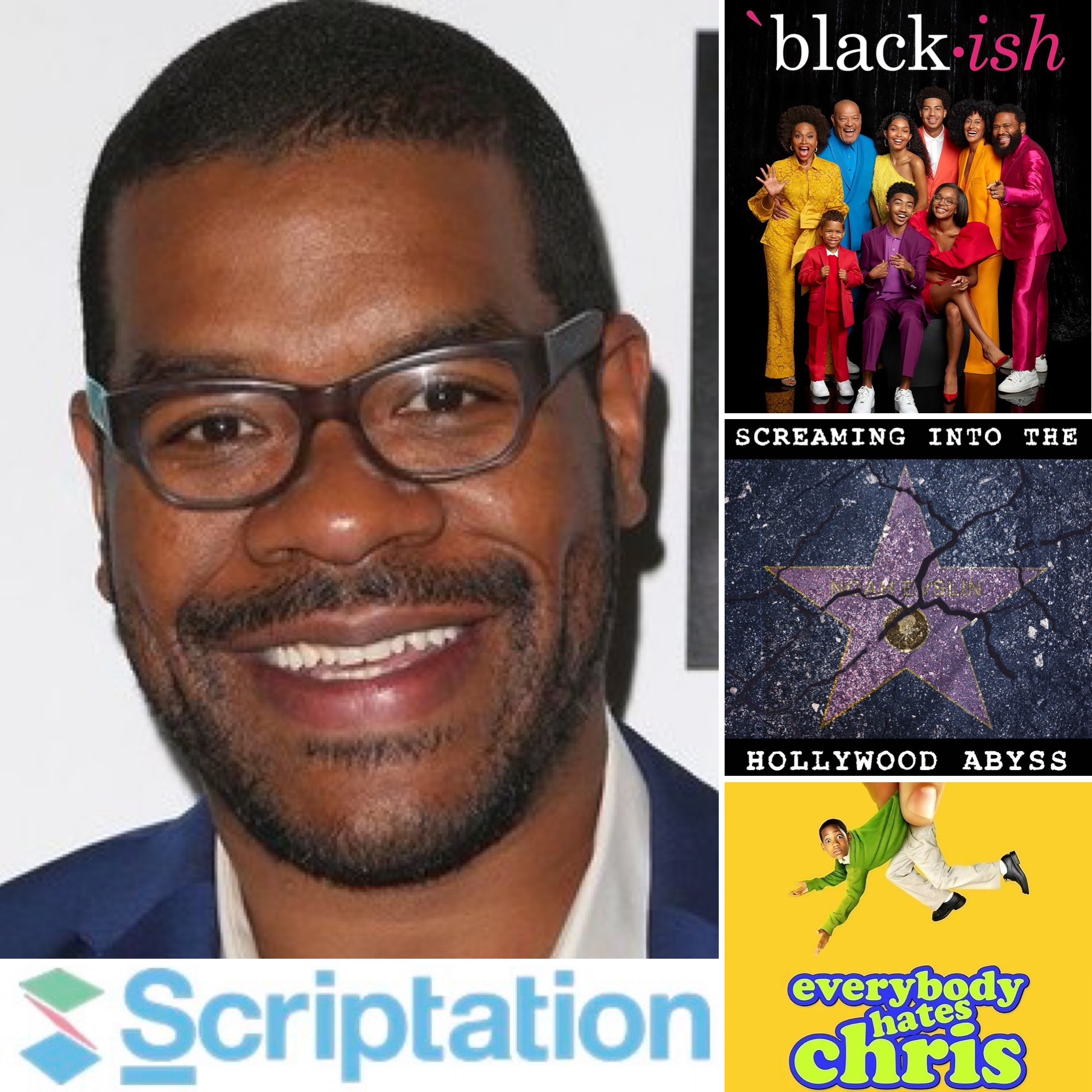
We have the impressive Courtney Lilly on the show. He talks about the state of Hollywood, being in the same storm but a different boat and the luck it takes to succeed. We hear about his start as a journalist, showrunning on a show created by someone else and the importance of Morpheus. Why Black-ish was a success, talented actors over good writing and the importance and value of diversity. A fascinating and insightful interview full of self-reflection, nuggets of wisdom and candour.

 Apple Podcasts
 Spotify
 Podchaser
 RSS Feed
 We have the impressive Courtney Lilly on the show.
He talks about the state of Hollywood, being in the same storm but a different boat and the luck it takes to succeed.
We hear about his start as a journalist, showrunning on a show created by someone else and the importance of Morpheus.
Why Black-ish was a success, talented actors over good writing and the importance and value of diversity.
A fascinating and insightful interview full of self-reflection, nuggets of wisdom and candour.
Any of us who've been in it for long enough, our entire career's delivery with all the goals for sure.
SPEAKER_03Major and minor failure in every single day.
SPEAKER_00Brought to you by the Emmy Award-winning annotation software scriptation. As ever, I am Dan Rottstein, your non-entertainment co-host.
SPEAKER_05And I am your still in the entertainment business co-host Noah Evels. On today's Screaming Into the Hollywood Abyss, itch, we have longtime TV writer, producer, and showrunner Courtney Lilly on the podcast. He's worked as a writer on such shows as Arrested Development, Everybody Hates Chris, and the Cleveland show before working his way all the way up to the chain to his current position of showrunner on blackish, mixed-ish, and groatish. Welcome, Courtney.
SPEAKER_02Hey guys.
SPEAKER_00Happy to be here. So I'm going to start just because I feel like I can't not ask this question at the moment. Is um is Hollywood as much of a mess at the moment as it's ever been, or is it recency bias?
SPEAKER_02I mean, you'd probably be better off asking that question to a historian, you know. I mean, we're all in our own sense of like felt existence with what it is. Um and I've been lucky to have been doing this long enough that like I feel like I've seen cycles of like change over the you know 20-something years that I've done this. Um and it everything feels different. I remember in the strike uh in 2007 into 2008, there was a fent the felt sense that I did not have because I was on a show that the day before the strike happened and right around November of 2007 was like our our lunch before we started the season up. So I went in that strike knowing or assuming that I would have a job at the end of it. So you go through the months of it, so on and so forth, strike ends, work starts right back up, you know? And so, like the the felt sense that so many people had about a change, and the change was obviously huge. I mean, that was a strike that talked about the internet, and we see the world we're in now, you know, it like not debating the values of it, but the way it was felt and talked about is like, is this really what the business is going to look like? You know, and so for a lot of people who lost deals and the and the lost money that you never get in the time, there was a felt sense, I think, for a lot of people that was very different than my own experience. Um, I'm also now, so that was, you know, what almost 20 years ago. I was at a different place in my career, different place in life. You know, in middle age now, would all those feelings feel a little more immediate, you know, because you have the fewer days ahead of you or then than behind you, certainly in this business, you know. And so, like, I think um I'm very mindful of my place in it. So to answer that question, um I I I I definitely take in a sense of overwhelming anxiety that is going on with people. Um, the perspective I often have um as somebody who grew up loving writing but never knew of a path to be able to do it, um, is the perspective of like in the history of mankind, nobody's ever made money writing. Very few people. And uh to feel fortunate that I've been able to do it for as long as I have, to be able to create a creative life and to be able to like foster a like creative, like I'm not a big fan of the world community because I think it's been co-opted by the internet now, but to to live in a in a creative environment with people aired here in Los Angeles. My neighbor was a piano player who played for Miles Davis, and that's something special, you know, about living in Los Angeles, and so special about creativity, people who see the world a certain way. So I think my view is a little more detached than I think the anxiety that it kind of like is permeating things right now. I also am not online that much, so I think that helps a little bit. Um, but perspective-wise, I definitely feel a shift. And the shift is coming from executives, it's coming from peers, it's coming from uh, you know, we feel it and we see it, I think, in the product sometimes too. Um, but like, is it worse? I think we just also live in a time now where everybody thinks everything is worse, you know? And again, that's and coinciding with middle age where you're just like, and there are things that are I I, you know, I don't want to be like guys 50 saying music was better 20 years ago or 30 years ago or whatever it is, but I think there are probably some real technological shifts into how media is being presented and consumed that have like changed our relationship to it. So there's a lot of change that's going on, and I think that is something that we're all having a difficult time kind of like finding the right words to articulate.
SPEAKER_00So this is probably a really unfair question, but do you have I don't know what the best way to describe it, do you have like a version of survivors guilt? Because you're the showrunner of a very successful show, and you've probably got peers who can't get anything made at the moment, and you're just sort of doing well.
SPEAKER_02Well, I mean, I'm I'm doing okay. I mean, like, I like again, it's all comparison. Like, you know, the show that I ran, like, we're not on, we've been on for years. So, like, I think it's again, so much of it is like your overall perspective and things. I don't feel like I deserved anything. I think deserve is a word that is like too often used in the American vocabulary and doesn't have a lot of meaning to me. Like, I've been very lucky. And to sit there and go, like, you know, I think a key part of being a person and being a writer is to sit there and go, but like their butt for the grace of God go I. When you see somebody who's unhoused, when you see somebody struggling with addiction, when you see somebody who lost both of their parents at an early age or whatever it is, to sit there and think that I've done a lot is a hard perspective for me, you know? Um, and so when I look at it, I'm just I'm I'm grateful and I recognize a lot of the luck that's gone on. I think in a way of answering your questions, though, it is like I definitely feel the like the like the desire to sit in the anxiety of my peers um of all levels, whether they're current showrunners and just talk about how bad it is right now, I don't have a lot of that, you know, and I have a lot of friends who are obviously involved in in writing. Um, I also like most of my friends, my closest friends are one's a lawyer, one's a nurse, and you know, the other one's a teacher, you know. And so like I have a lot, you know, and I sit there and I'm like, and having grown up, you know, in the suburbs in a very like upwardly mobile, trying to become middle class, eventually reaching their family, like there's a sense of what anxiety is, and not that people don't who haven't built these careers and these homes don't have anxiety. Um, and I definitely am aware of all the fortune that I've had to be able to be in a position where I can like be touching that that that live wire a little less than some of my contemporaries. I I guess to me, it is I always fall back on the blessings that I've had to be able to be able to do this for so long and the things that can't be taken away, as far as like the thing that's most important is to live a creative life, to view the world and make sense and process it through my work, whether or not it gets seen or not, you know, and whether or not it gets attention or not. And you're fighting for your career like we all are all the time, but it still kind of comes from a place of gratitude. Um, so probably that's a long way of saying there are there are elements of it that it affects some of my interactions. I'm not like, look, man, I'm not gonna go to some like writer's field screening right now just to be around, like I don't need that. Like I'm not gonna sit there and be like, we all need to be in the same boat. And uh, you know, it was definitely during the pandemic. Uh a friend who talked about and used the kind of like the analogy that we're, you know, we're not all in the same boat. We're in the same storm, but different boats. And that's where I look sometimes, you know, and um, you know, and some of that again is just age too, where it's just like we're all like, you know, taking care of aging parents, people who have children, taking care of them, getting them ready for college. All our anxieties are so different that I think it really the support system that we we kind of need to kind of like uphold ourselves. Um, that's been stuff that's been planted, seeds that have been planted years and years ago, you know.
SPEAKER_05We're we're all in the same storm but in different boats is an awesome line that I'm just sort of like, uh I'm maybe maybe one day I'll steal that for uh like, oh, that was a beautiful line on the TV. I know it was. I just came, I don't know where I got it from.
SPEAKER_02It's yeah, no, take it. It's like, I mean, there's my friend Laura Guten, she was talking about it, and I was like, Yeah, that is it is. And it was like we were talking about it during the strike, you know, where it was like you're walking around whatever place you're walking, and you know, they all had their different identities. Um, and it was a it was a sign. You'd sit there and you'd be like, Yeah, we're this is a collective action by a you know, a guild toward an end that has, you know, financial repercussions for all of us, but it's not the same. It's not the same.
SPEAKER_05The the I I just want to say here that I love, you know, when I come up and I do these introductions, I look do kind of a deep dive into your career. And often I'll have people on here who's done like, you know, uh one or two shows and then they created a show and then they're showrunner, and then it was like, well, where was that middle portion of your career where like like some of us like myself and and yourself have you know, step by step by show by show by show, you climbed up the ladder? But I definitely want to talk about you know the moment you transitioned to showrunner, but let's set the stage for that a little bit. Um, you talked about not that that it was sort of an unexpected career for you, because I get the sense you always wanted to be a writer, but that you talked about the difficulty of breaking in a little bit. You hinted at it. What was your sort of break-in moment? When did you realize, hey, this is something I'm actually going to do for a career?
SPEAKER_02Well, I got, I mean, I got incredibly lucky. I think that I think there's two things you kind of cited in that question in the first place of it was like, yeah, there was a, it wasn't like a ladder. I was not climbing a ladder. There was a large middle part of my career for a variety of reasons we can get into that later. That like, you know, there were struggles and ups and downs and you know, trajectories that are uncommon and so on and so forth. Um, but I also, again, luck being the main part of it, which is a hard thing to talk about, I think, especially when you're involved in these kind of careers, that, you know, I always say it's never, it's not a dream, it's a job, you know, like and if you are really interested in being a writer, and I actually think there are fewer and fewer people who are interested in that now. I think they're interested in other things um other than writing, which is fine. That's legitimate in its own way. Um, but if you were really interested in writing, you kind of can't help yourself and you're kind of doing it. And um, I started off as a journalist. I I went to uh Columbia for undergrad, which sounds incredibly impressive, um, especially nowadays. But like, yeah, I was I play football and I was good enough at football to go to the worst place to play football. That's all it was. You know, and so like um uh it was a great opportunity, and I love being in New York City. And I met some of my closest friends there, and it's a really challenging place, you know, and it's not like whatever, academically, all that kind of stuff. I was never a great student, I was always good enough, and I knew early into my time there that I was there for other reasons than to, you know, I was never gonna go get a PhD. Uh I have a mildly uh adversarial relationship with uh with education, which is ironic because my girlfriend is the professor, but still it's like that's kind of how I view things. And so um I needed to find a job out of school. That's what it was college loans, expectations, you know, no silver spoons. And um, you know, I ended up getting very, very lucky and finding a job um in in newspapers. The first job out of college was at the Providence Journal Bulletin in Rhode Island, and I covered two towns that between them probably had like 8,000 people, and I had to write hundreds of words a day on each one of them, whatever was going on. And uh, you know, that kind of writing on deadline, that searching for story, looking for humanity in people. Um, I was interested in in journalism, I really thought, as a a way to get paid, because that was necessary, to pay bills and rent and to write, you know, and you know, was I gonna be a magazine feature editor? Was I gonna write novels? Who knew? I was, I mean, I was incredibly young, 22 years old, and I had this job, which was also luck too, because like it was because they were kind of at that time, the Providence Journal was was doing like a small union busting like internship program where they had, you know, they brought in 16 writers who were like all under 27 uh to cover and work in their bureaus, which they had a ton of bureaus at that time. The paper barely exists and it doesn't exist in the way it did 30 years ago. Um, but it was a great opportunity. And I got a job to go in there, and uh three days into that, I realized I didn't want to be a reporter, you know, it was not my kind of thing. I stuck out for a year, moved back to New York, um, and I got lucky again um because Nickelodeon was doing a writing fellowship program, and I had a friend who told me about it. And again, this is the late 90s, the internet is a different creature, all the fellowship programs were a different creature. Getting into Hollywood was a different thing. I didn't know you moved out to Los Angeles and tried to become a PA or worked in a mail. I didn't know any of that. I just had a friend who told me about an opportunity. And I wrote a uh Simpson spec in a few days because I knew that show well. And I got, again, incredibly lucky and I got one of those fellowships. And it was the first thing I had written. So I did not have to go through like the kind of storm of rejection and denial to get that affirmation that tells you that what you were interested in, you actually have the capability to do it. Um, so that is a that is I was very fortunate in that, in that regard. Um, and so I was validated pretty quickly and uh it gave me a place to kind of land out here in Los Angeles. And you know, it wasn't a I mean, it by today's standard, I knew that was the summer of 2000 that I got that, and it was the first series in Nickelodeon Fellowships, too. I think they're still trying to do the program. We'll see, but it was on for 25 years, and you know, and um I I I think part of the reason I got it was because again, people just didn't know a lot of that stuff. It was the first year of the program. It wasn't like the Disney pro program where people knew a lot about it, and there probably was less competition, and I was lucky. But I took the opportunity and um, you know, worked well there, got a couple little freelance scripts, found a manager, and then through incredible good luck, was on a primetime show in three years, you know. So that is that is like all very, very, very like that's rocket fuel when you think about it, compared like for a career. Um, and so like uh the middle part of the career though, that was a little different. That's like once you get that first opportunity and you're getting kind of like buffeted by the waves. But like I I think for me, it was like I if it wasn't for you know, I just it was just a different time. You're you're young and somebody's like, hey, and I think I'd express to my friend, it's like, yeah, I'd be interested in writing television because I always liked television. I don't and I moved out here to do television. I wasn't interested in features, uh, it just wasn't my thing. I watched TV growing up, I loved TV shows, sitcoms, you know, and so like I I I mentioned that to a friend. They told me about an opportunity and I just chased it.
SPEAKER_00So um I was actually uh the first 10 years of my working life, I was a newspaper journalist. Um now that is an industry that's got even more problems than oh no, I I say all the time.
SPEAKER_02I'm like, I've seen an industry lose its business model, and so I know what it's like. You know, like in the 90s, when I was working in Rhode Island, the fear was the Providence was one of the last major papers to have to fold its uh its its evening edition. So it was like years off, like just when I'm talking like in 1997, I got there, it was just a few years off of like getting that gut punch, which was like existential to them, of like closing their evening edition, you know, which you think about it, which is like an insane thing now, you know? And so um I've and seeing them reel from that, seeing them be worried about television news, and that's the reason why. Well, everybody's watching the news at 11 o'clock and CNN and 24-hour news and cable, like disrupting their business model so much. That's before the internet. In the internet, we had one terminal in our bureau that's just lurking there, you know, and eventually Craigslist is going to be on it, just classifies. You you could see all the things that disrupted the business model in a way that is like very similar to the, I think, the main economic issues going on today with like the once very stable business model of Hollywood.
SPEAKER_00So look, obviously, we're uh we're a podcast about uh failure, but I want to talk I want to talk about blackish as a success. Um and I guess the question is, uh you know, I don't know how many shows you have uh thought about creating, how many pictures you made but why why do you think blackish was a success? And was it necessarily what you thought was the best show that you've compared to shows that never made it? Like did it did it have is there a better one out there that never got made or that you were involved in? But what why was it a success in a world where whatever it is, one in 25 doesn't make it? Why did that one work, do you think, and so well?
SPEAKER_02I mean, uh everything I think is timing and conditions. And I think like, first of all, it it started in 2014. It had uh there's a clear mandate because the studios and networks, and everybody knew what the business was at that point. So even if it wasn't able to be articulate, like now you go and you pitch something and they're just like, what are you looking for? They're like, we don't know. They'll maybe tell you something, but that'll change. When Blackish was pitched, everybody knew that they were looking for something to follow modern family at 9:30. Now, exactly what that is, but you go into the pitch, you have a target, and they have a and they know what the target is too. And it doesn't have to again be perfectly articulated, but you got a sense of what it is. It's like going to an Italian restaurant. You're like, we're gonna have maybe there's a red sauce, maybe there's Marsala, maybe there's something more traditional, but you get it, you get a sense of what's going on. So like it was a very different time, and then you walk in there and you have Anthony Anderson, who is like television stake sitcom staple. You're presenting a family comedy, and Kenya's pitching it, and sitting next to him is Morpheus, you know, Larry Larry Larry Pitchburn, who's like Lawrence Pitchburn, who, you know, is a movie star. And this is again 2014. We're we're maybe House of Cards is happening, you know, like you know, the idea of bringing film people to television in that kind of way wasn't quite the thing that it is now. That it it was not it was not quite as well trod a territory. Um on top of that, Lawrence and Anthony are incredibly talented. I'm a sports fan, and you know, there's a there's a thing that they say, it's not the X's and the O's, it's the Willies and the Joes. And I've worked with a lot of talented writers. They don't show up to see us. You know, watch Frazier, which is one of those scripts. I mean, one of those shows everybody's like, oh, the writing, the writing, the writing. Kelsey Graham and Grammar and David Idierce are killing it. They're killing it. You know, like it without talent, you don't have a show, you know, and so like from the jump, you had two actors who were ready to put themselves into it, who were both likable, who were incredibly talented, incredibly versatile by being comedic and being dramatic. Um, so you're set up really well to succeed. Um, and then the show being from Kenya Barris's point of view, and Kenya's an incredibly talented writer, and he's an incredibly honest writer. And he would sit there and look at the family, the conversations grow around his you know, dinner table and know how to present them in a way that was comedic and that was relatable. And we're it's 2014, Barack Obama is still president. You know, like I think there are a lot of things going on, curiosity about race relations that hadn't quite tipped into like what like became more like adversarial in the conversations. Uh, we're still kind of like coasting a little bit on the the crust of the Obama positivity wave. Um, it's all timing, it's all luck. And it's and it is incredibly and like Kenya being the kind of creative person and showrunner who who's very collaborative and likes to share. You know, he is again, he's he really as a as a writer was inspiring. We're peers. We've known each other for many, many years before we I started working for him. But he really did want to hear what other people had to say, and he liked the combat of it. It wasn't like I'm a Know and again, he's very talented, but it wasn't like I'm this genius, and this is my life, like the the life of my family, and you guys are just here to throw in jokes. He wanted to hear what people thought, and so we would have conversation and debate, and real things that were said between the writers that be go into the script, that kind of like selflessness to sit there and say this thing needs to be its own entity, that it that we all have to work to create it together, um, especially because it's a comedy. We don't have, you know, we're not a serialized drama that needs to sit there and like, well, we need to build this block to set this up and do all that other kind of stuff. Our our rhythms of our seasons were the rhythms of life. It's the season where they find out they're gonna have another baby, and it's the season that when she's pregnant for a whole year. And then, you know, it's like the season where they find out one of their they know that one of their kids are getting ready to go to college. So it's like really the rhythms of life. And I think having a very kind of natural, holistic way of embracing that so that like it could, we were never rigging, you know. And I think that was a template he set up that everybody was going to be listened to. Uh, every story was valid, and we would hash it out. We would just hash it out, whether it was like we would talk for days about stuff. You know, one of our early episodes, and I think it's probably season two, but I can't remember, was just about gun ownership. And, you know, you go around and it's Los Angeles and liberal people and all this other kind of stuff, and we pull the room and like half the people own guns, and you start talking about why they own guns, why people some people feel safe, why some people don't. And it's the kind of conversations that like you wish Americans had more of because you're having them with people who you respect and you're willing to listen to their points of view. And again, this is also 2014, 2015. Twitter wasn't what it was now. The internet, social media hadn't kind of like turned into this kind of like algorithm-driven thing designed to make us all turn on each other. I mean, those things were being seated and starting to happen, but you know, it was timing and in, you know, right place, right time, right people, right environment, and it caught fire. Um, and for the second part of your question, like, I don't, you know, like it is I like blackish existed. So I can say what it is, what it was, and what made it very good. Other things don't exist, you know. So like other things I've worked on on like that, they don't exist. I can't say, you know, I don't know how I would do. I don't know if the time would be right. You know, I think we, you know, it it is, it's impossible to kind of sit there and go like, oh, what could have been? You know, I but while again, being a sports fan, being mildly aware, I mean wildly aware of it. I think that's more like a career thing to me. Like, I don't know what my career would be like if I wasn't on blackish. I might have gotten an opportunity to one of the pilots I was developing to self and uh get my show. And maybe I would have got it years before I had the opportunity to run blackish. And maybe I would have failed. Maybe I wasn't ready. Maybe I needed to go through that show. Maybe I needed to kind of like find a place where like it really, as a as a show, like it was the first place I worked where I really felt at home as a writer. Um, and it's not just because there's a black show. I've worked on other black shows. I felt that way because we talked about writing the way that I viewed writing, the way that I viewed it being something like a real dialogue within ourselves and wrestling, you know, and a struggle both internally and sometimes externally. Um, and the comedy, a lot of it was very, you know, was the kind of comedy that I was into. And I think I needed to go through that to kind of get the legs to be able to sit there and say, hey, I am right about the way I think about things. And the success of the show allowed me to kind of like reinforce that internally, to sit there and go, like, okay, yeah, this is the way that I would want to do things, you know, and I feel confident in that. Um, but as a as a show itself, man, who who knows, man? Like I again, I'm grateful for every opportunity, but I'm also like, you know, there are so many, you know, paths untaken that it's it's it's you can't even sit there and really worry about it. You can try to change things. You sit there and go, like, you know, I didn't have a ton of mentors, you know, in the middle of my career. I was I was getting, you know, moving up through the ladders, and there are a lot of missed opportunities and things that I'm I definitely have. Like I think about, you know, I was mostly a black writer on white shows primarily, and I didn't have a lot of peers, you know, like my friends who worked on shows for UPN or worked on other black shows, they had a real kind of cohort that they could kind of sit there and like, you know, kind of like, you know, be in chat with, you know, and power out with. And for me, I was a little more isolated in some of the things that I was dealing with. Um, and it's not just race, again, it's about other things. Um and I and I do have envy for my younger writers who I've I've hired, that they have that cohort and those sense of peers, you know, and the business has changed a lot. It was not as diverse as it was when I started. And I said, and I could say the same thing about women. Every show I worked on for the most part, up until Blackish, had like I always say I work with more women on Blackish in the first couple of seasons and than I did in the prior 10, 12 years of my career combined. That's just how it, you know? And so, like it's I'm not the only one citing these things. And there's a there's a definite, like um a recognition of a loss, but also like that's the situations I had, and that's how I was kind of as it came up and raised in this business. And there are positives and negatives on both sides of it.
SPEAKER_05That's a uh fascinating answer. Thank you. Like, and talking, let's talk, let's stay in that journey a little bit because now I get to talk about uh your transition. And and again, my my deep dive into IMDB might be incorrect. Correct me if I'm wrong about your journey, but it seems like on blackish is when you became you went from co-EP to co-showrunner or showrunner with with Kenya. And can you talk a little bit about that? I mean, and many years coming, by the way, because you've been on a ton of shows before that as a very high-level writer. So it was like you've earned that next step, but can you talk about the moment where it where that happened, where you be your emotionally, and also because this is a podcast about rejection, failure, and adversity, maybe some of the early challenges you faced as as their first time sort of being a showrunner of a hitch of a hit network television show?
SPEAKER_02There are a couple of things. And it's just like, hey, here were the failed sitcoms of 2004, and you would go through these things. And a sitcom was such a different animal 20 years ago. They were very like so many multi-cans, and they were very, very premisy, and they weren't grounded in a lot of ways, you know. And as much as I came out to write sitcoms, my writing was a little different than like the like, you know, like Kenny, one of the things he always talks about, and we'd be in writers' rooms sometimes, and you'd there's this thing certain comedy writers would do when they wouldn't trust the comedy, and he would call like sprinkling wacky dust on it, you know, and like I definitely felt that where I'd be in situations run time and you'd just be like, wait, what are we doing? You know, and it's just like people stopped acting like human beings. And so, like, there was a lot of a sense coming up in my career that like I was outside of a lot of things. I could execute what was necessary, but I also wasn't like on whatever show the the person. And I also didn't have the same background, didn't my showrunners for the large part. Again, I and I'm excluding my this woman, Betsy Thomas, who's a big mentor. I worked with her on a show, My Voice on TBS, and Betsy's amazing. And like she really did like change my career um by recognizing and and really facilitating the the abilities I had uh and uh on the page, you know, and so like you know, I I I never looked at it like I was going to be the person that was going to run a show. Like nobody's like like it is part of it is a business thing. I think there's a you know, part of the job of running a show is to make people feel incredibly comfortable. People I mean executives or producers, whoever and jar feel incredibly comfortable um that you're spending their tens to hundreds of millions of dollars, you know? And I think like um for a variety of reasons, there's a there's a there was a larger gulf in that natural belief. And it sometimes it happens to people when they're oh, you came on again. It's just like sports. It's like, oh, you're a coach and you coach the I'm a Philadelphia Eagles fan. I grew up outside of Philadelphia. Oh, you know what, Kellen Moore, you are the offensive coordinator of the Eagles, they just won the Super Bowl, we're gonna give you a job. You understand all that. It's a lot of money, it's a lot of responsibility, it's those things. I needed that opportunity probably more than you're the hot shot. You're the kid who like we're ready to like rocket you to the top because I just didn't that that for whatever reasons, that was not the profile that I that I came up in. And so Blackest really was that opportunity because and it wasn't like I and by that point in my career too, I definitely thought about it. I was like, I'd like kind of separated showrunner. Um, I was I was I I came in this business to write, and I am really a writer. That's what I am first. And I've worked for showrunners who hadn't written and didn't write, and there were a bunch of other different things. And really, I have so much respect for the page and for your work on the page and envisioning what's going on. Um, so for me, I I never sat there as like that's a brass ring that I I need to reach for. You know, I I always wanted to write my way in certain things, but I never angled to be like, hey, I should run blackish. Um what really happened is like Kenya had a lot of success and he started doing spin-offs and he was around less, you know. And so, like, you know, again, success breeds opportunity for so many people, not just for him. Um, and we got to a point where really, like, and I say this in kind of half joking, nobody else wanted the job. Like, and it's not like, but again, luck. It's why does nobody else want the job? Because it's 2018 into 2019, and development is huge for everybody. There's all this opportunity, nobody's sitting on a network show. Like now, nobody's leaving a network show. Nobody's leaving any show, but there was a boom in what was happening, right? And nobody, and everybody's like, well, shit, man, I'm gonna go look and see what's going on in over a year. What's Netflix doing? I can get my own show, I could create my own opportunity. And so, like, it sounds crazy now that there'd be a network show that had been on for a while and they were having a hard time finding people. It was hard to staff sometimes because people had multiple opportunities, you know, and that's just where we were. And the studio kind of came to me and was like, you know, and again, God bless them. Uh the studio doesn't even exist anymore. But they came to me and they're like, Congratulations, you can run the show. And I'm like, doesn't happen that quick. Uh, I know, I know a lot of things. And like, we're not gonna just be like, I'm your boyfriend now because then you just got dumb or nobody else wants you. We have to have a conversation. And so, and look, I I it was the best thing that happened to me, you know, it was. It was, um, and it was the best thing that happened to me for a variety of reasons. I think like I didn't have a lot of that mentorship growing up, and I think a lot of writers and showrunners are very protective over their skill sets. And so, you know, and I think a lot of people like to hide in editing uh because that's the easier part, you know, where you've got all the pieces and you feel like you're making something better. Um, I never spent a lot of time in editing before I ran a show. Um, um, but Jonathan Groff, who, you know, was uh the showrunner with Kenya on the first couple of seasons of the show, came back in season five to help out, was on a development deal with ABC signature for the whole time. He, you know, uh was you know the showrunner of Happy Endings. Jonathan Groff did something, again, I say this all the time. He did something that not a lot of writers I know would do, which is he he was he like mentored and guided me, but in the in a very appropriate and cool way. Like he was a backstop so I could ask questions for, you know, and like in the first season that I ran the show, so that I could, you know, um be in the places I needed to be and figure everything out and really kind of figure out my take. And you know, we had a big, very talented cast that needed a lot of attention. He would sit there and take the director's cuts and edit them down, you know, with the editor. And he'd done the edits of the show and so on and so forth. And then he would, I would take his cuts and I'd recut them to what I wanted. And he's so, you know, and takes a remarkable person, especially a creative person, to to kind of be okay with that. To sit there and go, like, oh yeah, this is here, I'm helping him. I'm not the thing anymore. I am somebody helping out the thing, you know. And then, like, how many of us would sit there and go, like, oh, I didn't love what he did? Hey, you might want to sit there and do all that kind of stuff. Uh-uh. Different guy. Um, so that's luck. And that allowed me to get my feet underneath me. The fact that it was a show that I'd been on for I took over in season six. I've been on for five years. Everybody knew me. Cast knew me, crew knew me, everybody. I was welcomed with open arms. There's nothing adversarial. I didn't have to fix anything. I was solving problems by being there. And that allows you to have a kind of confidence going into it. So at a very supportive studio, I talk about this all the time, where like the first years of me running it, like I remember going into them. I'm like, we want to shoot an episode, we want to shoot a series of episodes in Africa. And like they listen to that stuff, you know, or like we'd be like, well, here's what we're trying to get done. There weren't a lot of no's, you know, and and that's the benefit of being a known entity on a on a show that's doing things for them that they want, whether it's making money for them or giving them like cachet, we were getting Emmy nominations. So like every little thing was made easier. So um I was incredibly lucky, I would say, in in that aspect of it too. All the hard things were just the hard parts of the day-to-day where you're managing people, you're managing personalities, you're managing anxieties. I think a lot of the real difficulties came in my second season when I um, you know, an opportunity arose that I kind of like put out there to work for. Like, so one of the spinoffs, Mixed-ish, um my first year running Blackish, Mixedish came on the air. They had to kind of do some shuffling around in season two, needed a showrunner. And uh through the work I'd done through season one on Blackish, I was able to run both Blackish and Mixedish at the same time in my second season. So um, but that was also 2020 during the pandemic. So by the time we get those are where the real challenges came in 2020 when I'm doing two shows and we're the only thing on the Disney lot. These, I mean, like literally you'd walk around, I'd have my two crews um and and we're right, we're doing virtual writing for the first time. Everybody's trying to figure out what that's like. Um, those challenges kind of presented themselves in a new way, but that's like kind of like fog of war. You know, you just kind of in it, you don't realize until later what what you're really dealing with kind of things. Um, but the again it the opportunity that presented itself in 2019 allowed me to kind of capitalize it in a way in 2020.
SPEAKER_00So um this has all been far too positive. So we're gonna have to talk about a negative question. Come on, come on, we've got to do this properly. Um this might sound quite transactional, but um tell me about the worst experience you've either had or witnessed in a room. So I'm I'm hoping for your sake, it's not when you were the showrunner, but you know, during your career, what have you seen in a room in terms of either um you know, a big problem that needed to be solved or some dysfunction in terms of leadership? You can make it anonymous if you want to protect people. Like what's the worst thing you've seen happen in a room?
SPEAKER_02Oh, that's interesting. I mean, like it's a hard question to ask. Are you saying like personnel-wise, personality-wise? You're talking about like incidents that need to be kicked up to HR kind of things. Like, what are we what are we looking for in a way? Because it's like some of it to me, when I sit there and I think about worst, like it's hard for me because like there's a felt sense for me of like this made me feel bad, right? But that's just like everybody on jobs and lives. And they're also go ahead, go ahead.
SPEAKER_00Yeah, so what I'm entirely fair. So why don't we why don't we do this? Give me one which is a personnel one, which obviously is probably best to be anonymous, but give me one which is one where maybe it's a failure of how the room was run in the way like a really good story didn't get out but for the wrong reasons, or some kind of sort of failure that meant the product wasn't as good as it could have been, or there was a great missed opportunity. And then just to round it off, there's bound to be one with studio notes or some terrible executive decision because they seem to make some extraordinary ones. So give give me give me three examples. So personnel, something that sort of ruined the writing or the storytelling, and then give me one that's something to do with an exec.
unknownGreat.
SPEAKER_00That helps.
SPEAKER_02And we'll move and we'll go backwards through them, and then I'll have you refresh as we go through them because I will probably get off topic. Okay, just part of the back end, like certainly the one that always comes up is is blackish as far as like studio interference. And we were incredibly lucky. And I say that in the same way that I talk about like luck being a huge part of like where my career went. We were successful right off the the bat, you know, and so being successful off the bat allowed us like everybody's like, well, what did they interfere with? What did they not want to do? What did they want to do? Um, and we never had that issue. If anything, there was something that got in the way, and that was me personally. And that was uh, we had a season where I really wish we had done this, man. It was probably 2019. It was my first year doing it, and I was allowed to be very ambitious. And I wanted to do an episode about abortion. And I wanted to do an episode about abortion because you know, there was a statistic that had come out where I'd read about right around then about how by the time a woman is 40, uh, 25% of women will have had some sort of relationship with abortion. And again, I wish I could remember the exact stat, either having had one or this, or all this other kind of stuff, right? And I'm sitting there and I'm thinking, so that stat was so staggering to me. And then the conversation around abortion is so private and not public that I was just like, if there was something that was happening to 25% of men, that would be all we'd be talking about. 25% is such a huge number. And I'm like, well, here we are at this family show. We have an opportunity to kind of like present something and have a real conversation with something. And I I don't say, I wouldn't say I chickened out. I think the the bandwidth of what we're trying to get done just didn't allow for it. And it's not my, it's not, I want to say it's not my lane. It's I don't have expertise. So I really would have needed to lean in on people to kind of sit there and find and, you know, we started conversations and talking with our other writers about it and women on our staff who had kind of gone through certain things or heard stories about certain things. And so, like it was a definite like it was, it was really to me, that is the biggest missed opportunity. And I know that it's not negative, it's not the network saying that we shouldn't have done something. Um, but it is, I think it's kind of the same in a way to be like, you know, fight not only for the stories that like other people are giving you hesitant, you know, being hesitant about, but also for the things that you like if it really sticks with you, I would rather have kind of like figured it out than have regrets. I mean, while at the same time, you know, there's a story we did about like, you know, kind of black uh on blackish, uh kind of like I would say like what's the word? There's a right word for it. Kind of um it is a word people do advocacy, like you're an advocate for their, you know, for their first size and helpful allyship. That's what it was, allyship. And we did it with Tracy Alice Ross's character bow and a new friend she made over the, you know, after the 26 election, and how racial dynamics and you know, allyship and all that other kind of stuff. There are people at the network who didn't love that. It just felt they kind of and I think it hit a little too close to home sometimes, where people that was one of the few times where I got a call that was just like, we don't like this episode. They've stopped us from doing it, they just kind of had some quick notes, and I think they were disappointed, and it definitely like ruppled feathers, but like it didn't make the show any any any worse per se. Um I think when it gets to the, and if I remember the second part about like staffing things or kind of like that hurt the show, I think many things in conception hurt shows, you know, and that's probably a better question for the development of things, you know, because like most times, like like there are things we did, like, you know, after um um um Yurashi Yadey's character on Blackish uh uh went to go do her own show, there was a concern about like, oh, we do we need a younger female present as a kind of like to ballast the show and so on and so forth. And we brought in uh Kabanjanae Wallace as an actress to create a character. And like every show when you watch it, every network series, you'll do this. You're like, well, here's the we try to do this. And like, you know, it's like cousin, whatever it was from different strokes. You're trying to do things to keep it, you know, to not mess with the formula too much. Um, and you know, and it was just a storyline and a thing that didn't work for a variety of reasons, but because we were successful enough, you could kind of shake it off and be just like, all right, well, that's gone, you know. Um, I think in a first season show, a show that has more difficulties off the rip, you're you're basically signing your death warrant at that point, you know? And so, like, those are one of the things to kind of be mindful of from. I think, like, as far And as far as like I mean, I've been very lucky. I've only been on one show ever that didn't do at least three seasons. You know, so like, and whether I was there or not, that's the thing, you know. And so like things that are like failure, um, as far as like the success of what they've done, I've I've I haven't witnessed quite as much. Um, um, and it's also again been part of the luck of my career because you're able to kind of like establish yourself and figure out how you're useful to people um because the shows keep continuing. Um so that's I think like one of the things I definitely noticed is like you usually shed staff a little bit after your first season, just because you as you figure out what the show is from pilot into season one, you start to go like, all right, well, here is who's useful and who's not. And you know, again, without getting into too detail that like alludes to names and personalities, um, a lot of that accountability comes on to the showrunners and their ability to, you know, like you dance with the girls that brought you, you know. And so, like, can you make the hires that you have work? And if they can't, how are you finding ways for them to be, you know, to be a success and not disrupt the room? Um, uh there's been some room disruption things that you've seen in times, and then you just gotta do the unfun thing and and make the changes that you need to make. If you're not getting out of it, what you're getting out of it, whether you're the showrunner or you're on the staff, you know, because it's it is a it's a team game, again, very sports-like. If somebody's not passing the ball, that's what you kind of have to do. And there's a first part of the question that I've forgotten.
SPEAKER_00No, no, no, you did you covered all three. Oh, perfect. Oh, yeah. Um right. Um, I think it's to know if uh unfortunately the last question. Oh wow.
SPEAKER_05We've reached our end of our hour, Courtney. Thank you for a fascinating deep dive into your career and a little bit of peeling back the veil on uh the ish empire uh that you are a part of. Uh, the uh our final question is something that we ask every single person that comes on the show. And it's if you could give one piece of advice to somebody uh wanting to join the business, and in this case as a screenwriter or even a comedy writer, what would that piece of advice be?
SPEAKER_02Oh, this is easy now. Because I've been thinking a lot about this. If there was something that you could do to sit there, you know, it's so funny because like there's always those things about like, hey, would you like to make more, you know, there's those financial pieces of advice. It's like, how would you like to make 5% more at the end of your year or whatever it is? And they're basically the trick of the advice is like spend 5% less. Then it's like giving yourself a 5% raise, you know, as like a cheat code kind of thing. I think the writing cheat code, and I think it's for real, and I think it's not, and I and I, and I'm and it I will also push people on this. If you don't read, you will not write. It's as simple as that. And you have to read fiction, you have to read a ton. And you have to sit there, if there's a way to understand, you have to read things you're not comfortable with, you have to read things that are uh uh classic, you have to have many different ways of understanding how human beings think. Because I think the real trick of creativity, and you know, not to get into the AI conversation, but like this is what I don't think AI will be able to do in a way that will ever satisfy me, is when I'm enjoying something, I'm seeing in somebody inside somebody's brain. When I'm reading a novel, that's the best way of doing it. And obviously it's a collective thing and in art that are more collaborative, like television and film, um, but music, how we're feeling, how the sensitive things, you know? And obviously there are, you know, forces trying to kind of just extract the value of really a nostalgia for, you know, 60s RB, and now we're gonna make the radio and cover sound like that. Um, that's not real. And as a writer, and neither is Twitter or the internet, what you're getting is kind of just like soundbite to blurbs. You need to get inside people's feelings and you need to feel that too, so that like when it comes time to kind of like regurgitate it through your own experiences. Everything in life has happened to people before. It's all there. And like, and it's and if you don't read, you're gonna be surprised by stuff, and you're not gonna know how people feel, you're not gonna understand the depth and breadth of reactions, you're also just not gonna understand what unites us as humanity. So that is the thing I think we're we're increasingly losing literacy. I think that is a giant struggle, and obviously people talk a lot about it, but I see it from executives, I see it from people who want to have PDFs read to them. Nobody reads, nobody reads. And it's and I think increasingly being a great writer, and that and that's the advice I always give the young writers. I'm like, the best way to have a career is to be great, which is obviously not great advice because it's not something you can really do. It's like, hey, you know what? I play basketball every weekend, I'm not great at basketball. And you know, you know, maybe that's gonna be harder. I'll have to find other things. You know, if you're not six foot ten, you know, it's gonna be harder to play in the NBA and you have to find other ways to kind of try to get to achieve your goal. But the thing about great writing is it does captivate. It does, it it's it's a spell. And and the closer you can get to doing that, and and not thinking of yourself as a brand or this is the genre, that's all business. Can you put one set word in front of another word, in front of another word to create a compelling string of words that become a sentence that pull people through to paragraphs and longer and longer stories? That's it. And it's and again, it's it is a terrible, terrible answer because it is it is also asking for people to kind of just have a faith that it will happen, because it's not something in our quantitative world that you can quantify. But if if you want to get ahead, put the phone down, read, read, read, read, read, read.
SPEAKER_00That's definitely not a terrible answer. We've this is the 149th episode of this podcast, and we have had some repeated answers because they're ostensible ones, but we've never had read. Um I think it's a it's an excellent, an excellent answer at the end of a podcast full of excellent answers. So Courtney, Lilly, writer, showrunner, thank you very much indeed for joining our show today.
SPEAKER_02Yeah, thank you guys.
SPEAKER_04Thank you so much for listening. Thank you. As always, each other is up to scriptation. My favorite screenwriting annotation software.
SPEAKER_05If you want to support the show, please download a copy at www.scriptation.com www.scriptation.com.
SPEAKER_04If you want to find me on social media, I'm at Twitter at N Twin, and more recently on Twitter.