Deepfakes and documentaries - Showrunner Ben Chanan, The Capture

 Apple Podcasts
 Spotify
 Podchaser
 RSS Feed
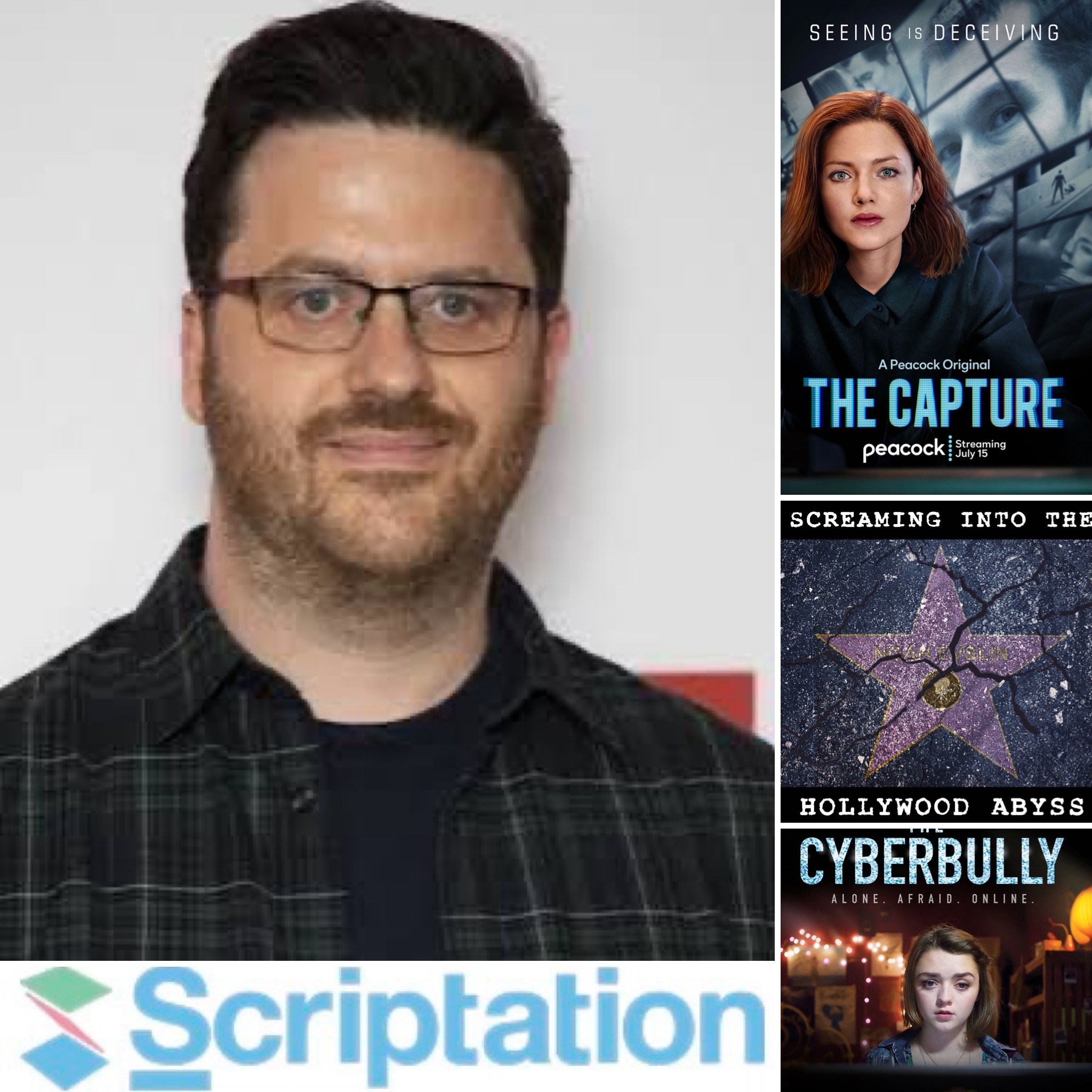
 We talk to British show creator Ben Chanan. The creator of The Capture talks about his transition from documentaries to scripted tv, carrying the idea around in his head for five years and how getting Covid nearly derailed a whole season.
We discuss about the spy genesis of the series, British show vs American show creation and the access and experience of documentaries.
Ben speaks honestly about his journey from editor to director to show creator and what he learned along the way.
SPEAKER_03
Any of us who've been in it for long enough, our entire career has been littered with jobs that we didn't get, projects that we thought were gonna go for sure, dozens of unproduced scripts littering long.
SPEAKER_02
All of us are running into major and minor failures in upload every single day. And I am your still in the entertainment industry, but not British co-host Noah Epson. On today's Screaming Into the Hollywood Abyss, we have BAFTA Award-winning TV writer, producer, director, and show creator Ben Channing on the podcast. Amongst many other things, he is best known for Our World War, Cyberbully, and most recently The Capture, which he wrote, executive produced, and directed. All three seasons of the capture can be found on Peacock starting on June 18th, 2026. Welcome, Ben.
SPEAKER_00
Hi, great to be here.
SPEAKER_04
So we got this is our second episode in a row with uh with a British person, so expect another high brow episode. Um so you you you wrote these episodes of um why do you think Americans need 14 people in a room to to write their TV shows when the Brits can just do it on their own?
SPEAKER_00
Well, I don't I don't know that we we we've started to embrace the writers' room in in in the UK as well. Although we do we do a sort of hybrid version where we I don't know, there's lots of different versions of that going on right now, isn't there? And I I I had a writer's room for the for the sort of fleshing out of the idea, uh at least on season two and three, I did. Um season one I kind of carried around in my head for about five years before I before I wrote it, so I knew I knew what I wanted to do. I think I mean they make more shows than us, right? A lot of those writers' rooms produce, you know, 10-part series, 12-part series, and more and more. So clearly it works. Um, but they probably only work when there's one person. You know, there's a show runner at the at the at the top, kind of, um, and everybody's writing to their style. I think I think that's the idea. But um I don't have too much experience of writers' rooms beyond beyond this and another show. I I did a I did a show with the writers' room once, and it worked okay. Um, but we don't have 14 people, you're right.
SPEAKER_04
The um obviously captures a anything that survives more than one episode in in today's world is great. But obviously, you know, it's it's a great show, it's very on the nose for what's happening in today's world. Tell me the story. I mean, you you mentioned going around in your head for five years. Nothing in your world is is ever linear. So tell us sort of how this started, some of the adventures you had getting it actually made, and then probably something that probably nearly ruined it at some point in the way that these things happened.
SPEAKER_00
Well, I think um I so I I had the idea, I made a documentary, I was I come from documentaries and uh very much cut my teeth in in dogs, and I made a documentary about counter-terrorism, and I learned the difference between intelligence and evidence, and I realized that sometimes spies have intelligence which suggests there's going to be a terrorist attack, but they can't, but but but the spies can't don't have the power of arrest. They give the police this intelligence, but sometimes the intelligence isn't admissible in court, and so the police can't go and make arrests. For example, intercepted emails, bugged properties sometimes aren't admissible in court. So sometimes the police know that someone's planning to commit an atrocity and they don't yet have enough evidence to go and arrest them. And this is a kind of cultural difference between Britain and America, in that America, I think would just go and they would just go and arrest them and ask questions later. Um, but I I I I kind of um I thought, God, there's this, there's this, there's an idea there, there's a series there. It took me it took me about five years to find the story to tell that idea, because it's like, okay, what what then if someone wouldn't it be useful if someone came up with a way of creating evidence? And wouldn't it be a moral conundrum if if I if I knew because I had because I had a spy in your cell that you had bought some hydrogen peroxide yesterday, but I didn't get it on camera, I didn't get it, didn't get any evidence that you did it. Wouldn't you know if I created some CCTV of you buying that hydrogen peroxide, would it, would I be doing good or bad, you know, by faking evidence, but I I know it's really happened. Um that felt like such an interesting moral grey area. Um, but of course then I needed a story, and so it started like, well, okay, well, who gets who gets some fake footage made of them and what who what's his story or her story? It took me a long time to work out that it should be this uh uh soldier played by eventually played by Callum Turner. Um I was I was um I was upstairs in my I was trying to write the first episode of the capture, which I wrote on spec. Um I mean before we get there, first of all, I I had this vague idea that someone should get caught on camera doing something they know they didn't do, and then it's their fight to to try and explain it. And in in doing so, we'd uncover this conspiracy that our intelligence community is creating fake evidence. And I called it correction because I didn't have a word for it, and because the word deepfake wasn't really invented. I certainly hadn't heard of it, and it's only it was only later on that people started saying this thing deep fake, and I've so I put the word deepfake into the script as we were shooting it. Um, but before that, I I called it correction, and um I was trying to write the first episode on and I I tried to get other writers involved, and I went through various hurdles and various going to various production companies and say, I've got this idea because I wasn't a writer, I was a director, I'd written a couple of things, I certainly didn't have the confidence to write a six-part series. Um, but then I worked on a show called The Missing, I directed season two of The Missing. I think just watching, although I didn't have anything to do with the writing, I saw the writing coming in, I saw the scripts coming together, and I and I and I I was very fortunate in that I was involved in the whole series from start to finish, which as a jobbing director never happens. And I think that gave me the confidence to go, okay, I can sort of see how a whole series comes together. So when I finished that job, I took a month off. I didn't have I didn't I decided not to take the first gig that came along, which is kind of how I lived throughout my career, is just take what take the next job and living kind of hand to mouth. And I thought, no, I'm gonna, I'm going to sit here and write the capture. And I but I didn't I didn't know who the character was. And I just remember one day I came downstairs and my my wife now, my ex-wife, but she said, Why don't you make him a soldier and her his defense barrister? And I was like, Oh my god, thank you so much. That just the whole story just clicked into place. Um so I owe I owe her big for that. Um, and and it just then it just suddenly clicked into place. Of course, he's a soldier, he's been caught on the battlefield doing something he shouldn't have done, but was it real or not? Um and it and it kind of the story kind of fell into place through the characters, you know. But it was it was uh yeah, it was it took it took years for the story to come together. Um yeah, and then well this the getting it made was I mean once I once I had the pilot written, getting a producer on board was was pretty straightforward actually. Heyday came in and they were they were great to work with. Um and there's not too many nightmares to tell you about about that. The first series was kind of a dream, but um but um but but but getting getting it out getting it out of my head and onto the page was the hard bit.
SPEAKER_02
Let's let's talk about the pain of this industry in a large in a more macro sense, because you you've worn you wear many hats as a director, producer. I saw that you were an editor, documentarian, uh uh, you know, you direct also uh narrative dramas, uh, and then you you write, direct, produce your own things, obviously along with Heyday, who are fantastic uh producers, and BBC One and the Peacock. So what is the most painful part of the what's the most painful hat to wear for you? Is it the is it the writing, the directing, the editing? What what's the um hardest part of the process?
SPEAKER_00
It's it's definitely writing, and and I will say writing that show, um there's something about it, it's just it's just so complicated and convoluted. And writing seasons, writing all the seasons, but seasons two and three were particularly brain-bleedingly difficult. And um I I I kind of the difference is I had season one in my head for a long time, and then suddenly they won season two, and it's like, well, I've got I haven't been carrying a second idea around in my head for a while. So I had I didn't put a writer's room together, we got the bones of a story, but really it was just a a week in a writer's room, and then the rest of it is me kind of going slowly insane by myself, and then season two was kind of a a cluster. Can I swear? You can swear. It was a cluster, it was a well it was a it was a it was a challenge because it was during lockdown, and every I mean everyone, I don't think anyone relishes the shoots that they they they did in lockdown. I remember we you know the TV industry got up and going pretty quickly. Um and but I remember I I directed season one of the capture, I didn't direct season two, and I wasn't prepared for the head fuck of writing because I writing whilst it was being shot and wearing my writer hat and my show hat and giving notes, watching dailies and giving notes is a full-time job in itself if you're good at it, and if you're doing if you're doing it thoughtfully and properly, and you're trying to come up with the note giving, don't you think, is a is a dark art, and it's like people I I've met maybe a handful of people in my life who are actually really good at it. Most people don't know how to give notes very well, and they don't know how to get to the knob of what the pro the point is, and and and say it in a way that is constructive and helpful, and you know, name drop, but we we mentioned heyday. David Heyman is really good at giving notes. This is partly why I think he's he's so good at what he does, is that he he does there's no bullshit, it's just like at eight minutes 30, it felt slow, I was bored, make it faster. It's those kind of that the thank you. I can do something with that note. Um and sometimes people people say, in fact, always people say it's too slow. It's one of the things is the note you're always gonna get is it's too slow. And actually, what people mean when they say that is it's it's uneven, or or rather it's too even. And what they mean is they want it doesn't mean make everything faster, it means make some bits faster, but and some bits even slower, and make sure there's ups and downs and ups and peaks and troughs. Um but anyway, um writing, writing is the hardest part, and I remember season two, we got really it got really sticky with the they were all like almost they were ready to shoot episode six, and I still hadn't written it, I still hadn't finished writing it. And I got COVID, and and I remember my there and then my my script editor said there is now a palpable fear on set that we're never gonna get episode six. And after about I had COVID for like a couple of weeks, then I started writing again, and then at one point my script editor said, Ben, there's this people are really desperate. Do you mind if I tell them that you had COVID? And I said, You haven't told them I've got COVID. I said, Tell them I was dying from it, tell them I had the worst COVID ever. And then and then so they say she did, and then when I finally made it back on set, everyone was like, Are you okay? And I was like, Yeah, I'm fine. Oh, yeah, yeah, no, right. I forgot. Um, so it was, but we you know, we we got there just about in the end, um, battling through like we we lost seven DOPs to COVID in that block, so it was it was um, but I'm sure everyone's got nightmare stories from that time.
SPEAKER_02
It was a very, very, very painful time in all of our industries, and it was a miracle that any of us got anything made with all of those. Uh, and I still have memories of, especially you didn't even know what anyone looked like, and you'd finally the day came where we all took off our masks, and we were all so surprised what the person you worked with for like years looked like because you've actually never seen them uh without it.
SPEAKER_00
Wasn't it depressing as well? And and and it was so weird, there was almost like a two-tier system where the actors could take take off their masks because they had to, and then and then all of us proles had uh had masks on.
SPEAKER_02
It was there was just something uh we had we we had A group, B group, and C group. So it literally was tiered. If you were around A group, you had to take all these precautions because the actors couldn't get sick. If the actors got sick, everything got shut down. But uh back to a real question, and then I'm gonna punt it over to Dan. Uh you know, you kind of glossed over this, but I have a lot of we have a lot. This is we we interview a lot of writers on this podcast, and so a lot of our listeners are writers both established and aspiring. And you just said, oh, you know, getting the producer was fairly straightforward. I wrote a script, and then Hayday, who by the way also made Harry Potter and other enormous properties. This is not a small production company, uh uh attached, and David Heyman gave great notes. Talk a little bit more about that moment in time where you like, like, did you because you came from a different side, did you already have reps who are like, this is great? Like, I didn't know you could write. I mean, obviously they're extending this material out to people, and people are responding. And what's what's your feeling when that's happening?
SPEAKER_00
Yes, that my so my agent in the UK is Jay Go Owen, who, yes, was my, you know, I was primarily a director, or very much just a director, you know, one of his director clients, and he didn't necessarily know I could write. I'd written Cyberbully, uh, but it was co-written, and I'd co-written a couple of other things. But this is my first, this I think it turned out to be my first single writing credit. So I think, yeah, he was probably as surprised as anyone when he read my spec script. Um, the great thing about Jago is he doesn't, and it's a it's it's perhaps unusual for an agent, but he won't send things out unless they're ready. He will he'll send things back to their to his clients and go, just keep working on that. I'm not gonna send it out yet. And it's like um it'll be but the great, the great, the plus side of that is that when he does send something out, people will sit up and take notice. Um he you know, we talked about it, maybe I made a few changes, but basically he got it out there quickly, and it was it went around various. I I had meetings with various production companies, but very quickly, Rosie Allison from Heyday read it and said, I want to meet Ben immediately. We met and they said, and this was like uh a week after it after it had been sent out, she said, even less than that, she said, if you sign with us today, then we'll give you a bonus. We'll give it like a little, a little, a little, a little bonus to sign today with us. And and so I and so I did. So I I I kind of it was it was it was I hate to say it, but it was easy. It was um, you know, after after the sort of the long haul of actually getting it out of my head and onto the page, it was a it was a pretty cracking pilot and um and had a lot of interest. And and the interest got me known as a writer suddenly, because everybody had read the script that was going around, and it got me another show that I did called then ended up being called Then You Run for Sky. That was that was off the back of just the pilot script being read by people, you know. So if you know, for for any budding writers out there, I think there's nothing you can it the capture existed as a as a two-pager and a five-pager uh um synopsis pitch document for years, and people were mildly interested in it. But the moment it became a script, suddenly it was it was uh it was a go. Um then there was a lot of notes from David and and and Rosie and getting it from from there to the BBC. There was a lot of fiddling. Um but I think that's that's sort of part of the course, isn't it?
SPEAKER_04
So I know you shouldn't read too much into things based on a small sample size, but we've done about 160 episodes of this podcast, and majority American, and quite a lot of the Americans showrunners we've had on here were either journalists or stand-up comedians before they made it. Um I think 80% of the Brits we've had on. Um so we had Minky Spiro, I'm not sure if you were with her on last week, um, have were documentary makers and then moved across. So um, I don't know if that's a peculiarly British thing, but tell me about sort of the skill set from the documentary side and how it works for. I know this obviously there was very specifically like the idea for the show, King, but in terms of the actual broader skill set, what in your documentary work did you learn that makes you good at what you're doing now?
SPEAKER_00
Um, I tell you exactly what it is, and it it's it's the experience of going around making making documentaries is such a privilege, and it and it it's it's it's very enjoyable, but it's and it's hard work sometimes, but it is a great privilege because you go around the world and you meet people and you go backstage into every if you're making a show about the army, you'll go back back with them into their barracks. Yeah, but you'll go behind the scenes. If you're making a show, I made a show with the CIA. I got to meet people from the CIA. I made several shows about cops and soldiers, and you go into their homes. I made I made documentaries about stabbing victims in South London, and you go into people's homes when they're during the wake, when they're you're tiptoeing around the the most, you know, sort of awful. You're with people at the most awful times of their lives, sometimes the most successful, when they're winning awards, when they're when they're when they're grieving, whatever it is you are just soaking up and and all from different walks of life. You know, from from I literally interviewed former former head of I interviewed the former head of the CIA and I interviewed former head of the Department of Homeland Security, I've interviewed government ministers in the UK, but I've also interviewed drug dealers and um people selling guns in in the on the street in the UK and grieving families, and you just you what I was doing without realizing it was all the while collecting this wealth of dialogue, frankly, which I now you know like I I all all those different voices and all the different ways they speak. I kind of have this roller decks in my head now of all those all those characters that I met that I can kind of select elements of and sometimes quotes from. Um so it's kind of life, it's it gives me it gives you a life experience, but it really fast tracks you into so many people's lives, and you really you get to know such a breadth of characters. Um, that that it that and that I think it it really does. I think some of the best people I've worked with have had other jobs, you know, have had haven't just been doing drama all their lives. They've been doing um I just worked with a brilliant director, Anthony Phillipson, and he's he's from documentaries, but he's all he also did behind the scenes, he did, you know, like um um um movie um um behind the scenes videos and and uh um press packs and all those kind of things. And and and he had lots of iterations to his career, and I think that it that's kind of kind of what I think I think that gives you this breadth of experience when you're on set with with a bunch of actors and and your crew and you're trying to make something fictional that you that you've been in lots and lots of different real situations can only help, I think.
SPEAKER_04
So um that's a that's a great answer. I guess the question is n now what do you do? So do you go back and do more documentaries on and now that you've or now that you've you know you've done Three series of a show on you know BBC and obviously Peacock over here. Um do you want to come and break Hollywood? Do you want to do more big shows that you create? Do you want to work on someone else's? Is it features? Like what where do you go now that suddenly, as you said, you know, scripts that you've written will suddenly be of interest to people because that's how it works now, because you've you've had some success?
SPEAKER_00
Um all of the above. I mean, I I've got various various projects in cook cooking, and um one of them's a feature, and another one is a a TV a new TV series. Um I'm team teaming up with other other people as well. Um so I I yeah, I think I think the thing to do is to have lots of potential projects cooking because you don't know which one's gonna go. I think if you put all your eggs into one basket and say, of course it's good to have a passion project, but I think you've got to have you've got to have a lot, you've got to have a fairly, a fairly wide slate because they're not all gonna get made. Um so yeah, I wanna do I want to do all those things.
SPEAKER_02
Ben, we would love to keep you here for a very long time, but we know you're on a bit of a press junket, so I want to get to your our last question before you have to go, which is uh, this is a question that we ask all the guests that come on our show. If you could give one piece of advice to somebody joining the industry, and in your case, you you wear a lot of hats, so I'll let you pick between writer and director, which seems to be your your main two at the moment, uh what would that be?
SPEAKER_00
Okay, so I think um people can't help you if you don't know what it is that you want. So I think that's what you've got to decide. And that doesn't it doesn't have to be what you want ultimately, but kind of pick something tangible that you can that you that it could be achievable within the next three to five years. So I want to be an editor or I want to be I mean, I always think I want to be a director is it I found it took me a long time to become a director because how do you do that? So I chose edit when I came out of college, I chose editing because I thought that's a tangible skill, I know how to do it. I'm not embarrassed to say I want to be an editor. I did want to be a director, but it took me it took me another whole there's another whole story about how I went from from editing to directing. But um it's I think I think my advice would be decide on a tangible goal, a short-term goal, and and tell people that's what you want. Because people people want to help. I think there's a lot of helpful people around, but they can't help you if you don't know what it is you want. Yeah.
SPEAKER_04
Great. Great advice. Um, in in in that in an industry where some people do want to help you. Um as you say, you've got to help yourself, be helped. Um Ben Shannon, uh, creator of the capture, thank you very much for for joining us. Um hope we don't throw a four four series at you just in case. Um you haven't got an idea for that one, but you never know. And we look forward to seeing what you do next in your career.
SPEAKER_00
All right, great to meet you guys. Cheers. Thank you. Thank you.
SPEAKER_01
Thank you so much for listening, and thank you, Jumpy, for the music. And our community. As always, each episode is up to by scriptation, my favorite screenwriting annotation software. If you want to support the show, please download a company at www.scriptation.com backslash. Damn this. If you want to find me on social media, I'm at Twitter and Elswin, and more recently I'm friends.