Take 156 - Showrunner Erica Messer, Criminal Minds Evolution, Party of Five, Alias

 Apple Podcasts
 Spotify
 Podchaser
 RSS Feed
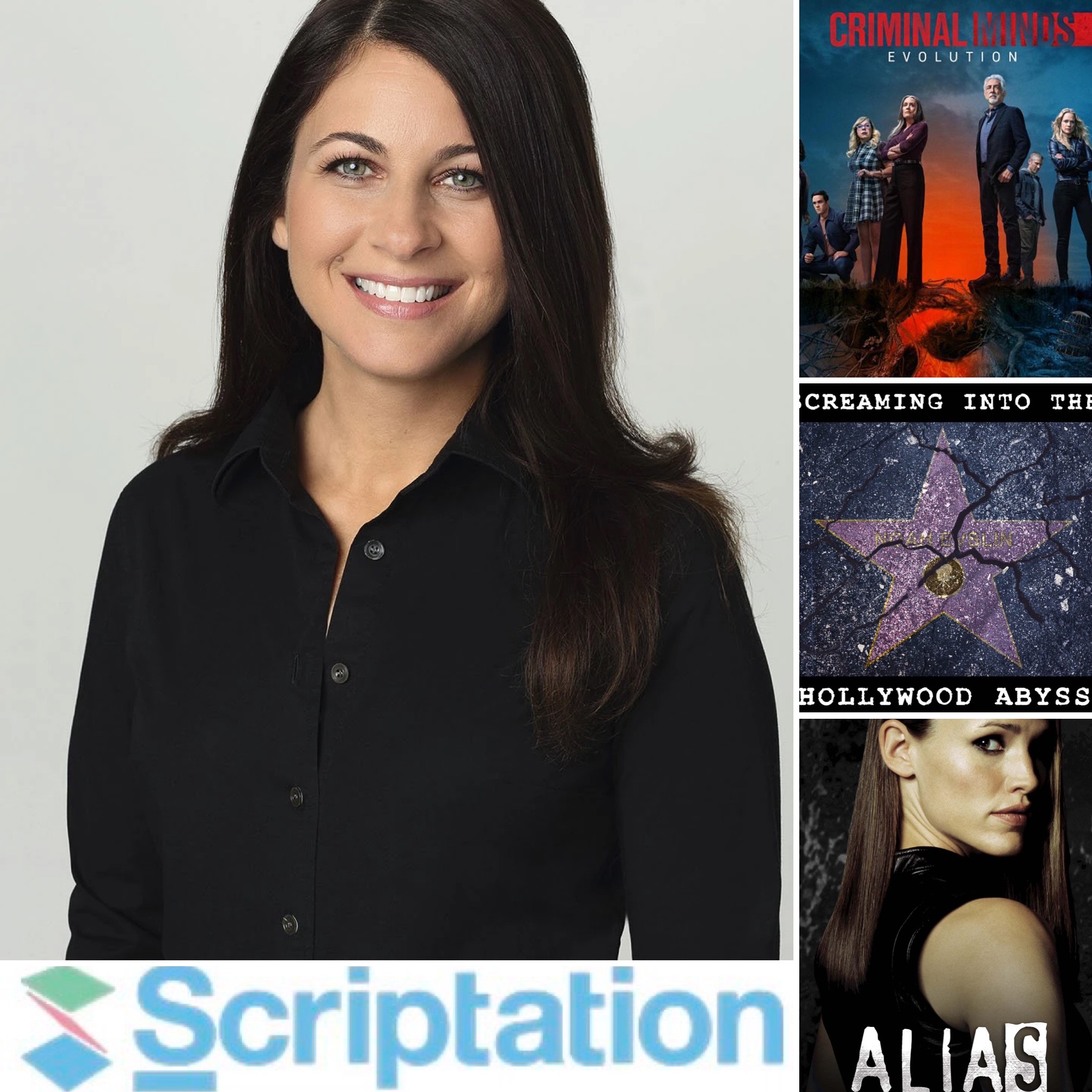
 We have the excellent Erica Messer on the show.
She tells her story of moving from temp to writer, the greats she learned from and how she got to work on some of the most iconic shows of our time.
What she learned from being a bartender, the joy of studio lots and how she coped with working on a dark show like Criminal Minds and being a mother.
A fun, informative and in-depth chat with someone whose been in some of Hollywood’s most iconic writing rooms.
Any of us who've been in it for long enough, our entire career has been littered with jobs that we didn't get, projects that we thought were gonna go for sure, dozens of unproduced scripts littering the floor.
SPEAKER_04All of us are running into both major and minor failures in Hollywood every single day.
SPEAKER_00For every success, there is months, sometimes even years, of hype failure. This is one of the only businesses I can think of where failure is the default.
SPEAKER_04That's the first year. Like everything in our business, you're gonna count.
SPEAKER_03I was being told by my manager that it's yours to lose. And I promptly lost it. And I remember thinking like, well, that's it for me. I blew my one big shot. What I've realized from that moment is it's never one big shot. There will be other shots.
SPEAKER_00Welcome back to Screaming Into the Hollywood Abyss, a podcast about rejection, failure, and adversity in the entertainment industry, brought to you by the Emmy Award-winning annotation software scriptation. As ever, I am Dan Rutstein, your non-entertainment co-host.
SPEAKER_05And I am, you're still in the entertainment industry, co-host Noah Epslin. On today's Screaming Into the Hollywood Abyss, we have writer, producer, and showrunner Erica Messer on the show. Erica has written on such shows as Alias, the OC, Charmed, the Biggest Little Farm, plus was uh part of writing or creating a whopping 361 episodes of Criminal Minds Evolutions, the series she currently executive produces and showruns, as well as an additional 26 episodes of Criminal Minds Beyond Borders. Welcome, Erica.
SPEAKER_01Thank you.
SPEAKER_00I think I've said this once or twice before on this show, but given the amount of television you've done and the shows you've been on, where was there time in between all of this to actually have any failure? Because at least from the outside, this looks like one string of unbelievable successes. Is that is that real, or is that just how IMDB makes your career look?
SPEAKER_02Oh, yeah, that's how IMDB makes it look. There's so many struggles within every single credit you just mentioned. Um, and learning opportunities, as I think we would all agree, that's where we find uh the most out about ourselves. Um so yeah, there's there's moments in in each one of those credits that that gave me uh a lot of things to learn.
SPEAKER_00So um well let's let's do this from the beginning because it sounds like you've had quite a lot of consecutive success. So let's go back to right at the beginning when you got into this world, because surely even you can't have been successful and show running big shows in your first job. So so tell us sort of how you got in and how hard it was to get in first time around.
SPEAKER_02So when I moved to Los Angeles from the East Coast where I grew up, I knew that I wanted to work in the industry. And so do a lot of people when they come here. And I asked friends who had come before me what's the best way in, and they said through a temp agency. I was like, okay. Uh I didn't really even know what those were outside of, you know, some government work in DC and whatever. So I um I ended up meeting at this temp agency that had the contract for the Fox lot. So at that time it was mid-90s. So it was um the network was really popping off. They had a lot of great series on. I mean, this was the era of not just 902 and oh and Melrose, but New York Undercover and Allie McBeal and the X-Files and uh Party of Five, just a lot of great television. And that's just on the drama side. There's plenty of comedies as well. And so I ended up um becoming a temp that got assigned to the Fox Lot for short gigs, maybe a week here and there, and then got to meet a lot of people in in that world. And they said, hey, instead of being at the business affairs desk this day and the casting desk that day, why don't you just come and work for an executive and be here all the time? So I was able to get uh my hands on the Fox job list, which was a very um, very great thing to have insight to. And I ended up working for the vice president of drama series for the network. And in that time is when I really learned a lot about what the network executive's role is in making television shows. And I have utmost respect for that. Um, but I also quickly realized like, I want to be the one who's sending you scripts and sending you cuts. I don't really want to be on this side of it. And so, because of all the assistants that you meet when you place a call for your boss to call their boss, um I asked a lot of assistants who were uh, you know, from the X-files to Party Five, um, is there any opening on your show for a writer's assistant or any entry level? And thankfully, Party Five said, yes, we have an opening for the writer's assistant, an executive producer named Mark B. Perry. I don't know if you remember Mark. Um, he left to do a pilot and took the assistant with him, leaving a spot open. So I moved over there in like the fall of 1997 and finished that season of TV with that group of writers. And it was an incredible group led by Chris Kaiser and Amy Lippman, and uh Robin Green and Mitch Burgess were on that show. PK Simmons was on that show, Mark B. Perry, Lisa Malamed, Tammy Ader, uh Alan Heinberg joined that show. So it was just like an incredible group of people to learn from. And then within maybe six months, I became Chris and Amy's assistant along with another woman who um was writing on her own, and I was writing on my own. And then Chris and Amy had a development exec who said, you two should write together. You work for a writing team, you should write together. And so we did, and that partnership is what um what got hired for alias in the OC and charmed in the first few seasons of Corona Minds. So it and, you know, just kismet for all of it. And um and I think I've just truncated like eight years of my life. But that's basically um, you know, getting started by saying I want to work in the industry was the biggest boundary that I kept to. I think if I moved out to LA and when times were tough, which was from jump, you said, ah, I could just go be a bartender. I could just go do these things that I have the skill set for because I did it all on the East Coast. I just kept saying, no, I if I'm here, if I'm far away from all my family, I want to be pulling into the Fox Lot every day. I don't want to be, you know, um working at the gap, which nothing wrong with it. I've done all these things. I'm just saying I really, really stuck to that. And I think um I know a lot of people who who started in the industry that same way, where it's like, I'm here to do this thing. I just want to be in the world.
SPEAKER_05I want to drill down on a little moment that you talked about in this. You mentioned you have a you had a great starting job. Uh and by the way, one of my first jobs was off the UTA job list. So those job lists were so critical in getting us work uh early on, especially like assistant and and intern gigs. But uh you got a you landed a great uh job with the head of, you know, the uh GP of TV development, it sounds like at the Fox Lot. And did you know you said it was in those moments where you decided you'd rather be a writer than on the producer side, and you realized maybe that you were climbing the wrong ladder? But was there you know, before that, was were you were you a writer since birth, or was it really a decision on the fly going, hmm, I I like the guys who are kind of, you know, with their messy clothes and messy hair, stumbling at noon with their coffee rather than this other side of things. Was it an on-the-fly decision, or was there always the seeds of a writer inside you, do you think?
SPEAKER_02Um, I think I've always been a storyteller, and I always like gobbled up every story that I was allowed to watch, television especially, um, just even in my childhood, like begging to watch The Incredible Hulk and Chips and all of those shows. So I think I was always a storyteller. Um, everything that I studied in college ended up leading me down the path of wanting to do documentary work. And in Los Angeles, there's not a lot, there was not a lot of that available in the mid-90s. Um, if I had gone to New York, I could have pursued another path of maybe the news magazines like um Dateline and 2020 and 48 hours. Um and that was a path that I considered and then pivoted to the Los Angeles path. Um so when you think about the things that I had the skill set for, it was writing, directing, and editing. And at the time, I didn't have money to buy a camera to invest in something like that. I didn't have a way to edit anything, but I could write. And that was the thing that I felt was gonna get me uh to that next rung of the ladder, as you said. And writing, you know, after work. And back in those days, you know, you were working those desks till 7 or 7:30 at night. And then you'd get home at 8:30 at night and be eating, you know, a crummy noodle dinner and trying to come up with um, back then it was spec scripts were were really the bigger thing to write. Um, so what shows were my favorite shows, and what specs would I be excited to write, and that kind of thing.
SPEAKER_05Thank you for that answer. I'm gonna ask you a really, really nerdy question, and I apologize in advance. This has nothing to do with failure, uh adversity, or rejection. But it's uh it's well known amongst TV writers, anyways, that the alias pilot is one of the best pilots ever written. It's just it's just a joy to read. And for those of you who haven't read it, who are listening to our show, and you're an aspiring writer or an established writer, go read the alias pilot. It's pretty amazing. So, where in your process, because you talked about coming into alias in season one, were you hired? What was that process like? And what was the feeling was there a pilot script already written? Uh, you know, JJ, I'm not sure how this whole development process worked for him, or did was it just, you know, he had a straight-to-series concept or whatever it was? When did you read the pilot and realized you were kind of joining something super interesting and special?
SPEAKER_02So I'll take you back to um right around the Party of Five era, there was a spin-off of Party of Five starring Jennifer Love Hewitt and Jennifer Gardner, among others. And uh so Jen Garner was in Chris Kaiser and Amy Lippman's world um for a couple of different series. Most most recently it had been Time of Your Life. And so she was just such a delightful human. And I remember when that show ended, and she said, What if like the next thing um I do is something that you guys write on? And then like she can manifest because that's exactly what happened. Um, so in 2000, uh signed at UTA, which was huge, and then did all the rounds with all the executives and our um uh I can't even remember. We wrote a spec once and again. I don't know if you remember that Joe, and Sex in the City. So our agents were just shopping us around and those uh scripts around. And I think we made it onto Francie Calfo's desk at ABC at the time. And then we ended up getting into JJ's world. He read something, really liked it. I'm not sure which episode or if he read both. And he called the office one day that we answered the phone, Kaiser Lippman Productions, and it was JJ saying, like, hey, can I talk to Deborah Erica? Um, it's JJ. I read your stuff. Can you meet for coffee? And we were like, Okay. So we met him for coffee in the Palisades at the Starbucks that sadly perished in the fires. And we got there and he said, Um, you know, I really love your writing. I'd really love for you to come join the show. Um and do you want to grab lunch? Because I'm actually hungry. So then we had lunch right next door, and it just became this really easy, lovely conversation with him. And at that point, we had read the script, which, as you said, was an incredible adventure. Um, I mean, you just fall in love with Sydney Bristow from Jump. And then um, and then I think UTA might have had the pilot. And so we went to UTA and watched the pilot. By the time that day ended, we had the offer to be staff writers on the show. So um it was in there, Vanessa Taylor was um the other female writer on the show. So out of it, that was a an incredible room of writers as well in the that first season. Um, can I name them all?
SPEAKER_05Yeah, you can well, by the way, Vanessa Taylor, I live in Hawaii and she's a really good friend of ours. So we can we'll talk about that later.
SPEAKER_02Uh tell her hi.
SPEAKER_05I will, uh.
SPEAKER_02Oh my god, I love her. Um, and also you're winning because you live in Hawaii. Um, so um it was JJ, obviously. John Eisendrath ran the room for him. He had worked with him on um Felicity and he was running the room at Alias. Um Alex Kurtzman and Bob Orsi when they were a team. Um, Jeff Pinkner, Jesse Alexander, Daniel Arkin, Vanessa, and then Deb Fisher and I. So there were 10 writers for that first season, and um it was it was like lightning in a bottle. And in the cast of that show was so incredible. Um yeah.
SPEAKER_00So at what point did you realize this was all gonna work? So obviously you come over, you you start off, you do your temp agency, you get into some rooms, you you you you answer your phone as if you're a real company, as it were, and it works. Um, and now you know you're in this room. And I know it's something like difficult to look back on this, but can you remember sort of I don't know if it was the show or the day that you're like, I think I'm going to be able to have a real career that's gonna last for a long time. Or or maybe you're you're still not even there yet. Um, but was there a point where you're like, this has worked?
SPEAKER_02I feel like there were a couple of points. Um landing at party five felt like, oh, this is yes, this is what I want. And I loved that people came in with their coffees and their messy hair and their, you know, um holy jeans and whatever. And I was like, oh, I didn't even know that this is how writers lived, but this is my, you know, inner child. Um and then so I feel like getting on party five felt like this is where I'm supposed to be. That was the right move to go from the network to here. Um, and then I remember that night that we got the gig for alias, I didn't sleep. And um my husband and I were both just talking about it. And I just remember it was like a sleepless night of just joy. Like this is the beginning. Like this, like I thought maybe it was the beginning when I moved to LA. I thought it was the beginning when I got a gig that wasn't temporary. I thought it was a beginning to be on party of five. This is the beginning. Um, and so it was a very visceral, like, I'll never forget that. Um and then, you know, alias was two seasons for us, and then we were let go. So there's, you know, one big lesson, right? Um we were let go in that second season, which look, happens. I mean, it doesn't make it less hurtful or devastating, even though you know you're in good company. This happens to plenty of people all the time. Um, it still stings. You still feel like you've given a lot to something that you feel emotionally invested in. Um and now it's gone. And now it's you don't get to play in that sandbox anymore. Um, I would say I think we were let go on a Thursday, and by Monday we met on the OC. So it wasn't a long um licking of wounds, but it was um still a loss that was probably felt. The the sting of that was felt for a while. Um and then the OC, Josh Schwartz, what it was his first show. Um and the right he had he had been picked up for a pilot in six episodes, I think, to shoot. Um, not just a six episode script order, and the writers were assembled pretty quickly, and then we were all sitting in a trailer on location while they were shooting the pilot. And we hardly knew the characters, right? In the pilot of the OC, Summer is just Seth's crush, and she's really doesn't have a big part in the pilot. And then when we saw what Rachel Bilson was doing on screen, we just pivoted in the writer's room and said, well, she's gotta be in the show all the time because she's too good. Um and so when the OC then hit, because you just kind of have your head down doing the work, and then when it launched in the summer to this incredible fanfare, and then I want to say repeated nearly every night between when it premiered and when the second episode came out, um, you're like, oh, this is like this is a fun series that people are going to be talking about. Um and growing up in a resort town, while it was certainly not the OC or the level of wealth and uh debauchery of the OC, it was uh a familiar place for me. And, you know, my husband's been a surfer since he was a kid, and we had Sandy Cohen, who was a surfer, and these other people surfers. So I felt like this was something I could really bring a lot to this show. And then you write your mistakes as it, you know, your mistakes that you made as a teenager, you get to put into these other characters. So that was fun. And then did one really long season on that show. That was the year that I I want to say we hit over 26 episodes, maybe, between getting a six-episode initial order to a 13 order to a back nine or something like that. It was ended up being a lot of episodes. Um, and then I was pregnant with my first uh child on that show. So when that show ended in April, it was like everyone left, all of the writers left. So that felt like another um, well, that stinks, you know. This it felt like we were all jiving and working, and the show was clearly a hit, but they made a massive change in the writer's room. Um, so we once again in really good company. Um, that show had um Josh Schwartz, Stephanie Savage, Alan Heinberg, Melissa Rosenberg, Liz Friedman, um JJ Philbin and Lauren Gusses, and a guy named Brian O, who came on. So again, a really robust room um with people who continued uh on after that. I think Melissa left the OC and wrote Twilight. So, like, you know, it it was it was it was a very talented room. Let's put it that way.
SPEAKER_05Alan Wonder Woman and Yeah, exactly.
SPEAKER_02Exactly. And we knew Alan from Party Five, so that was like our connection in that space. Um but uh then from there went to charmed in what was discussed as possibly their last season. I think they last minute in did end up getting one more season or a truncated season, maybe. Um, so we went from you know being on two series in the conception of those characters to now working on a show and maybe it's seventh season or something, um, which is so well established and has, you know, so many hours of TV to watch to catch up on. Um and so that was a that was a whole different skill set to come in and um try to, you're not establishing the voice of the show anymore. Now you are mimicking the voice of the show, which is an incredible skill that I would argue most writers need if they're not creating the show themselves and need to learn how to sound like the show. And so, you know, plenty of uh stops and starts in in that world, trying to find out what you know, what episode would work, what episode haven't you done yet. Uh and And then finding our voice within that series. And then when that ended for us, after that, the one season on it, we had met on Criminal Minds. So once again, being able to jump into a show in its first season and help really define the characters and the voices and in the world. So yeah, I'd say out of those shows, other than you know, Party Five, which was established, most of them were first season shows.
SPEAKER_00Fantastic. So I don't live in Hawaii, unfortunately, but I do I do work in Orange County and the legacy of that show still endures. We my day job, I run a professional soccer team, and we did our schedule release one year. Um and we were trying to come up with ideas. And one of my guys said, Why don't we take the opening credits from the OC and like put graphics for the our opponents over the top of who the characters are, but with all you know the waves everywhere and the music. And we did it, and um, it was the most successful schedule release we've ever done. Um I'm not sure if we broke any copyright rules, but it was very good. Um, that show is that it defines that place, everyone knows that place because of it, and that legacy is continuing. Um so completely pivoting. This is a nerdy question, but in a in a completely different way. It's a criminal minds question. Um I think I asked this question of somebody on I think we had somebody from Law and Order uh SUV on um uh last season. So this is about what it's like when you're in the world. So my wife and I love criminal minds. We used to we watched it before we had kids, and then I think when we at one point we stopped watching it for a bit because as parents we viewed the show very differently because there's a lot of children getting who knows what's happening to them. Um we got back into it, but as new parents, as somebody who actually, as as a mother as well, how do you, particularly when you were on it for so long, how do you sort of when you've had your darkest episodes, of which there were plenty, how do you sort of make sure that it's still, you know, a a fun and engaging writer's room? And how do you sort of separate writing about some very horrible things? I'm sure, like a lot of this stuff, research from probably real life or semi-real life. How do you sort of mentally separate a show that dark from from your life?
SPEAKER_02Um, that's a great question. And I think I had my own version of shows that I stopped watching when I had my son. Um and randomly, The Wire was one of those shows that I was like, oh, I can't. And then I ended up on Criminal Minds, which is kind of hysterical. Um But in the first, I would say the first two seasons of the show, uh, while my son was only one when the show started, and I had my daughter in the second season. So I am a, you know, new mom with a toddler and a newborn. Um, and I told my husband, like, we need to put more locks on the doors. Um, what can we do to protect ourselves and our house? And I definitely went into like overdrive in terms of what we could do to protect our uh family. Um, and then the more I would read and study, the more I felt like I was getting a master's degree in psychology. And I stopped being um as paranoid and just became more fascinated. And I think I was able to compartmentalize a little bit more, maybe like actual law enforcement people do, or they see what humanity is capable of, but then they have to go coach Little League or something, and they have to be able to um leave work at work. Um, so I think I just started leaning into the curiosity more than I did the fear. And um, we have incredible uh consultants along the way. Uh Jim Clementi is one of them who had was an active FBI agent when the series started and then retired while the show was on, and then became a consulting um, you know, writer on the series in the maybe the last um uh seven or eight years of the show. Um he's not on with us right now, but he was with us on the CBS version. Um and so he still consults for us, I should say, um, but he isn't in the writer's room every single day. And just knowing who these people are when they're not chasing the bad guys, they are like us. They just have a skill set in their day job that is very honed on finding criminals. Um, I have a family of government workers. That was the that was the family business when I was growing up in DC. Um, and my brother is a police chief in Florida. And so the law enforcement component to this series, I take very seriously. And I try to protect the heroes who are out there every day making life uh safer for all of us. And so that's, I think, one of the ways I was also able to pivot is I'm focusing on our heroes and their journeys, and they have to go fight the darkness, but I don't focus on the darkness, I focus on the light. And I think that pivot for me came um probably around, you know, probably around a hundred episodes into the show, to be honest, where um in that hundredth episode, uh, you know, a major thing happens to one of our main characters. And um, as much as it like broke all of our hearts to do that storyline, it was like, no, this is what's at risk for the people who are keeping us safe. They they are risking their lives, they are risking their loved ones. And that felt like a very um like honorable thing to tackle, given that that's what real people are doing for us in our, you know, in our fictional space could pay some respect to that, then then we're doing good.
SPEAKER_05Awesome. Uh first I want to just this isn't another aside, but as a longtime, you know, writer on various staffs, I super appreciate. And I think you're the first person to do this to this detail of how often you are referencing the other writers on your shows, because it can feel to people who are listening to our show that it's just one or two people in the writer's room or three people making all these shows, but you've obviously listed so many people that were so important to the successes of the shows that you were on. And by the way, for those of you who are listening, go back and Google the names that she referenced and see the careers that they've had since they've been on these shows, because these are some of the heavy hitters. Um okay, but back to a uh sort of a two-part question about your career um during the Criminal Minds era. It feels like there was um uh two moments that that, and you can talk about in as much detail as you want about in your career, which were both probably really scary and really exciting. Uh one of them is when you kind of went off on your own and you were no longer part of a a writing team. And the second part, the second part of that is when you became the showrunner of the show. And like the responsibility of that and the feeling of like, you know, you you know, you did the thing that not everyone does these days, which is you came up literally from like temping to uh writer's, you know, assistant to, you know, all the way through the different levels of the staff. So I think you you probably were more than ready to be sure where I want to happen, but I'm really curious about your mental state during those two moments of your career.
SPEAKER_02Yeah, that's a great question. So when um when the partnership dissolved, it was post-the 2007-2008 strike. And when um the showrunner at the time, Ed Bernero, was given some mandates about cutting budgets and doing all these things. Um as the writing team, you're still assigned the same number of scripts as everybody else. So at the time we would have like 24 or 26 episode seasons, which is hard to believe. Um, and so we would we would get like three assignments a year as a team. But if we weren't a team, we'd each get three assignments a year, right? So we were almost more valuable to the show if we weren't a team. Um, and I think at that point as well, we were we had so much experience being writers on a staff and juggling, you know, prep and production and post that we didn't really rely on one another in in the team way that maybe we had seen Chris and Amy do, where it's like, oh, you tackle post while I'm doing this, because that's really kind of more the showrunners' responsibility. When you're just an individual writer-producer in the series, you're you don't have that same uh responsibility, I guess. So anyway, it was sort of a natural um outgrowing of a partnership, uh, but it's still the end of a relationship. And so there are um plenty of things to learn from that. And um she has gone off and done amazing things, and I've stayed at Criminal Minds to eventually, you know, take over the show. So um, but so I think for that it was what every sort of breakup would be, which is there's some sadness in it, there's some gratefulness that it existed, and there's some excitement of what this new chapter will be without that partner. So all of those things were happening all at once. And that was at the end of um season four of Criminal Minds. And then so season five, I was um writing on my own, uh, writing this show for the first time on my own, which was just exciting and great. Um, and we the show itself had a big milestone that year, hitting its hundredth episode. So being able to be a louder voice in that room was really lovely. Um and then I would say by that next season, uh season six, it was evident that changes were afloat um in the in the uh yeah, there was a it was a tough year, we should just say, because like the the two of our three female leads were released from the show, which had nothing to do with any of us or what any of us wanted. And so in having to sort of play the card you're dealt, it was a it was a challenging year. Um, and then by the end of that season, Ed Bernero, who had run the show for uh six seasons, um well, I should say he he he left in season six to help run suspect behavior, handing the reins to me and Simon Miran. So we were co-running it in season six, with Ed still uh, you know, an executive producer. And then by season seven, both Ed and Simon were gone. And at that point, they were the last two remaining from that very beginning. So those guys were gone, and then I was running it. And um, to your point, I feel like I had hit so many different rungs of the ladder, including, you know, the temping and the executive assistant work, all the way to now I've jumped to a show at the very bottom, you know, as a writer's assistant, then a showrunner's assistant, then a staff writer, story editor, exec story editor, co-producer, you know, all the way up to executive producer. So I had plenty of experience being on the field. I just was often also on the sidelines for some really big things that I could watch other people learn from. And sometimes it was a, you know, sometimes it was a victory, sometimes it was a loss. Um, but being on the sidelines teaches you so much too. So by the time I took over, like, of course, there's gonna be stumbles, but I was just so excited that going back to an earlier question you have, I think that was another big moment for me of this is gonna work out. Or I'm now I'm getting started. Right. So it's like 10 years into my writing career, I felt like I was just getting started.
SPEAKER_05Well, that's another like 13 years of showrunning, it sounds like, after that. So you know, you had no idea what was coming down the pipe for you. And speaking of coming down the pipe and no idea, I mean, uh, we've asked some sort of technical questions, some nerdy questions. Uh what we haven't really asked you yet, and I want to kind of kind of like set the table for it for you, is a question about uh rejection, failure, and adversity. And since you've had such a, you know, expansive career, uh, and you don't have to name names and you can sort of pick the the anecdote that you want to tell, but what is maybe your worst Hollywood experience that you just maybe still think about or just gives you shivers or is a life lesson for you or others?
SPEAKER_01Oh my gosh. Um Wow.
SPEAKER_02I mean, I think it was it's difficult being one of the only women in a room. And I would say that from, you know, any any of those times that where that was the case, because you kind of fall into a category of being treated as like a little sister or um and there's no in there's no malintent behind it. It's just sort of the roles that you end up playing. Um and I think because of that, you might not feel like your voice is heard equally. And I wanted to make sure when I took over here in season seven that it was definitely equal in terms of female writers in a room. Um and my number two was Janine Sherman-Barrois. I don't know if you know Janine, but she's incredible and uh very strong voice. And um, it just felt like that was the right thing to show other women in the room you're not alone and you're not the only one at that level. There's other people that you can look to that are higher level. Like Vanessa was up for me as a staff writer. She was a producer. So I could look up to Vanessa and say, like, okay, it's possible. I can be a producer one day and sit at this table. Um, so I always felt like that was an important thing to do. And I think part of it, part of my reason for wanting to do that is because I didn't always feel that way in a room myself.
SPEAKER_00So um one thing we've talked about a lot on this show over previous episodes with showrunners is that showrunning is it's not really a job, it's six jobs. Um between five and eight jobs, depending on how they define it. Um and it's one of those things where you know you're good at certain things and then you get promoted, and then at some point you get put in charge of things, some of which you you might be good at and some of which you you might not be, um, but you've re you've reached the top. Um what this is a sort of two sides to this. What bits of show running are you are you best at, would you say? And then what part of it are you still I'm not saying still learning, but what what part would you say is your weakest part of the eight of the eight different jobs?
SPEAKER_02Um yeah, it it's funny because it I think it all goes back to even as soon as I could start working, I I had like three or four jobs. I just um, you know, I I was always a babysitter, and then then I could work at my mom's friend's jewelry store, so I did that. Then I could work uh, you know, at a nail salon, I did that, and a bartender and a cocktail waitress and a hostess and whatever. I never I had like a rainy day job and a sunny day job and a day job and a night job. Like, so I think there's a part of me that's always been conditioned for the multiple hats, and also realizing at the end of the day, almost every job we have is a customer service job. And that can be um, you know, the actual audience of the show. It could be my department heads, it could be the cast, it can be the network executive or the studio executive, um, the press, right? Like it's a customer service first kind of position. So I think that I'm probably good at that, because I think I've been trained my whole life to work in that space. Um and I'd say I the thing I love to do the most would probably be to write. The thing I get to do the least is write. Um, you know, just I mean, in that romantic way of like, you know, sitting with a steaming hot beverage and being in cozy clothes and get to write. Um, that doesn't exist on this job. And I think is one of those things that I was able to do before I was showrunner. I was able to sort of take my time with stuff. And and then that, you know, you learn a very different skill of having to write and rewrite others and all of that. So um, and I think, you know, budget is something that I am very aware of, but it's something that I um I might have a different perspective on it than maybe my studio execs, where I feel like, okay, if I save my money here because I've written a bottle show, it's because I want to have an explosion over here and I want to be able to spend it here. Right. So, not that I'm not managing the money. I I'm able to with the help of my line producer and UPM and a gazillion other people, all the department heads who deliver on time and on budget. We're all a team and we all do that. But I think it's my least favorite part. And therefore, probably just not my strength.
SPEAKER_00Yeah. No. Um quite a lot of people in management jobs find the budgeting part the least favorite, particularly when you think you've saved somebody some money to do something better. And they're like, oh good, we've saved that money now. Right, exactly. Yeah, yeah. I have experienced versions of that. Um, also, I want to say as well, the uh I think we've probably asked the sort of what are you good at, sort of to a showrunner, maybe 30 or 40 times. No one they've described showrunning as lots of different things before. Um no one's ever described it as a customer service job. Um, and that's a really interesting way of of of looking at it. And um, you know, they always say that the jobs you do at the beginning of the career help you be good at the ones at the end. And it's interesting that actually some of your varied ones that might have been quite low level at the time might actually have informed this. So that's a great answer. Sorry, right, Noah, over to you for the last one.
SPEAKER_05Eric, I think we are just you know scratching the tip of the iceberg with this interview. I would love to go for a lot, lot longer, but clearly, you know, you're a very busy person and you have another 400 episodes of Criminal Minds to conceive uh and get on the page. So this is gonna lead us to our very last question. And it's a question that we we end every uh podcast episode with. And it's if you could give one piece of advice to somebody uh joining the business, in this case as a screen a TV writer or a screenwriter, what would that piece of advice be?
SPEAKER_02Oh I think if you're wanting to be a writer, it's because you already are a writer. And I think you have to tell stories that you're passionate about, you have to tell stories that you have a perspective on that maybe someone else doesn't. And you just have to practice a lot of patience because these things do come and they often come in their own time, but you have to be prepared for when it does come. So I think writers write is sort of something that I heard forever, and I think it's true. I think in and if if you're saying I wanna be, you can take I Wanna Be Out. I am a writer.
SPEAKER_00Um Erica Mesa of like listing your shows is fun. Like they're like everyone will be like, oh yeah, I love that show. But I mean, unbelievable, you know, lots of lots of people have successful careers on good shows, but not everyone gets to have them on shows which have sort of these sort of niches of fan favoritism and legendary status that you've had. Um but thank you very much indeed for for coming on our show and telling your your story. So thank you very much indeed.
SPEAKER_01Well, thank you guys so much. What a great what a great time.
SPEAKER_05Thank you, Erica.
SPEAKER_01All right, thanks.
SPEAKER_05Thank you so much for listening, and thank you, King, for the music. And our wives for putting us with our command story. As always, each episode is brought to you by Strip Tation, my favorite screenwriting annotation software. If you want to support the show, please download a copy at www.striptation.com.
SPEAKER_00Steve is www.stripation.com backslash dance.
SPEAKER_05If you want to find me on social media, I'm at Twitter at NFL.
SPEAKER_00Talk more about me on social media because you people seem to care about social.