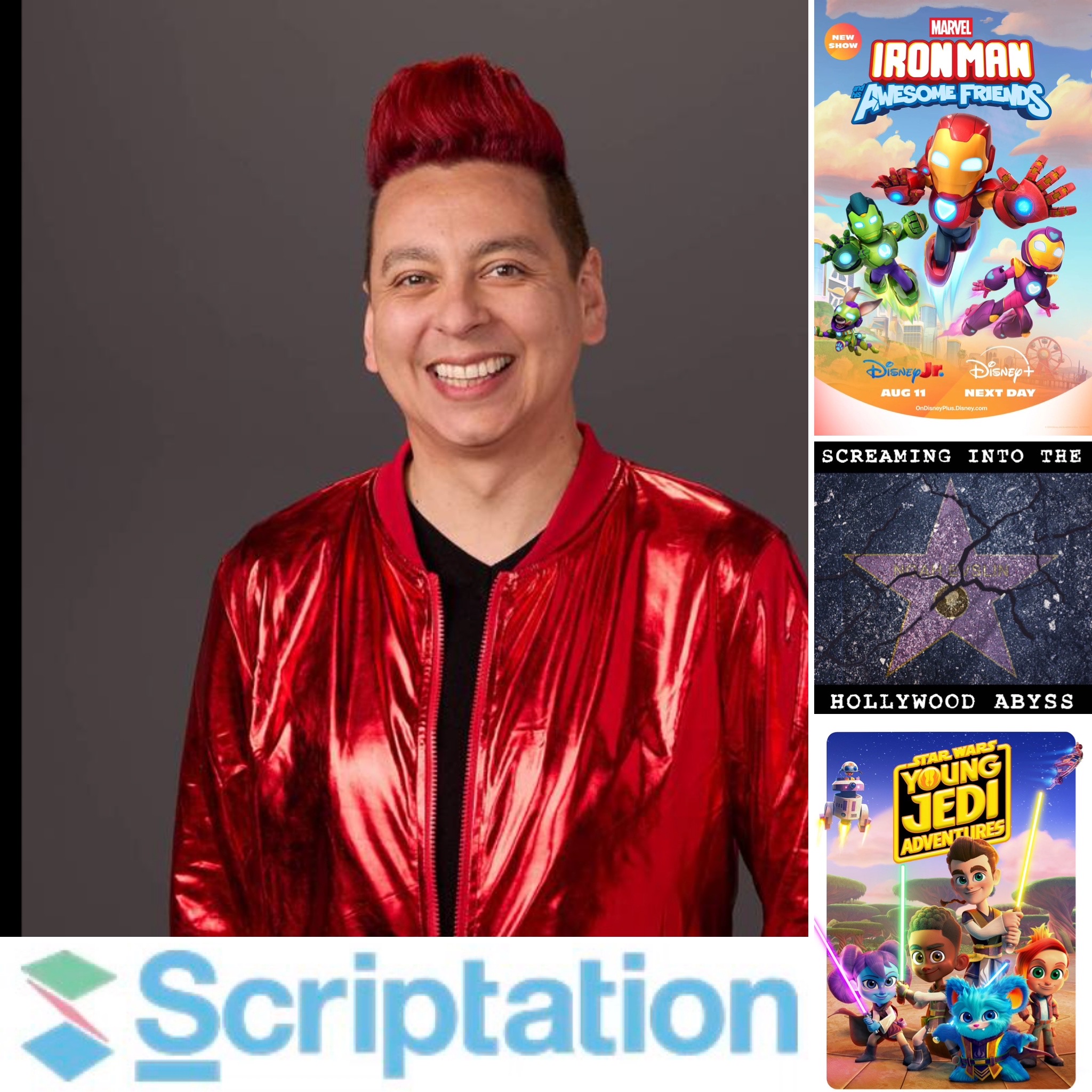
Take 145 - Story Editor (Head Writer) James Eason-Garcia, Ironman and his Awesome Friends, Star Wars Young Jedi Adventures

 Apple Podcasts
 Spotify
 Podchaser
 RSS Feed
 We talk to the incredible, passionate and enthusiastic James Eason-Garcia, co-EP of Ironman and his Awesome Friends.
Noah and I geek out a little and cover both James' career while also asking superhero and Jedi questions of a man who has special access to both of those worlds.
We talk about his journey from fan to working on these projects, the excitement of actually of walking through the doors of Disney to work and taking notes on established franchises.
James talks about the state of the industry, the ongoing fascination with superheroes and collecting memorabilia.
A really insightful discussion full of pure joy (from all three of us) of such fascinating worlds.
Any of us who've been in it for long enough, our entire career has been littered with jobs that we didn't get, projects that we thought were gonna go for sure, dozens of unproduced, literated one.
SPEAKER_04All of us are running into both major and minor failures in almost every single day.
SPEAKER_00Brought to you by the Emmy Award-winning annotation software scriptation. As ever, I am Dan Rotstein, your non-entertainment co-host.
SPEAKER_05And I'm not even sure we have an industry anymore, but if we do, I am still in it, and that's my seat. I am your entertainment industry co-host, Noah Epsilon. On today's Screaming Into the Hollywood Abyss, I'm thrilled to introduce TV writer James Eason Garcia to the podcast. James is the co-EP slash story editor, which in animation translates roughly to head writer of Marvel's upcoming Iron Man and his awesome friends, premiering August 11th on Disney Jr., I think August 12th on Disney Plus as well. He's also worked uh on Star Wars, The Young Jedi Adventures, and many others. And is the first guest that my son insisted I have on the program. Welcome, Jason.
SPEAKER_02Nice to be here. Thanks for having me.
SPEAKER_00Well, I didn't realize that uh Noah's son was involved in this. Um I'll take it. Look. I want to talk about like normal things, because at the end of the day, creating art and being part of the industry, whether it's sort of Star Wars or Marvel animation or not, is you know, it's still business, as it were. But also, let's not there's an elephant in the room here, whether it's Noah's kid or my kid, or frankly me. Um I've got like uh backdrop envy. Obviously, this is an audio podcast, but if people were able to see this on video, they'd see five lightsabers, um, and then all sorts of action figures and castles and so on. So, would it be fair to say, James? I was gonna take a flyer here. Would it be fair to say that this isn't just work for you? Like this is a life passion.
SPEAKER_02Uh 100% life passion. Um, I am one of the lucky few people who gets to do what they always kind of wanted to do and set out to do. And I really, really remind myself of that every day when things can get difficult or there's you know, just struggles trying to get through things or type deadlines. I'm always like, yeah, but at the end of the day, I still get to write stories with superheroes in them and have fun while I'm doing it.
SPEAKER_00So we had um Gary Witter on, the Rogue One writer, which was you know, he he had like a games background, but obviously he loved ascending to a point where he got to to work on these sort of these projects. For you as a kid, obviously, was your aim just to enjoy these things, or did you think one day I want to actually be part of creating this universe?
SPEAKER_02I I always I always want to point out I grew up in the 80s and the early 90s, which was pre-internet, before anybody could like research things easily or YouTube things easily. And I was just a huge animation fan from my earliest memories. I loved animation, which my love of animation got me into comic books. But I was probably about eight or nine before I realized oh, there's actual human beings behind this that make this, that this is their job, that this is what they can do. And that really like flipped a switch in my head. And I started doodling, you know, drawing my little comics. A lot of times I was writing my own stories, um, little fanfics based on my favorite TV shows and movies and things like that. So my my my passion for it really came from from there. And it's all I've ever really wanted to do. There's never really been another path for me besides like, I'm gonna somehow figure out a way, come hell or high water, to get it to get into those, to get into those rooms and get into those spaces where I can play with those characters, where I can tell those stories. And, you know, again, I'm lucky to uh to Noah's point, there's barely an industry left, but I'm lucky that I'm holding on to this one little corner of it as tightly as I can and enjoying it as much as I can.
SPEAKER_05All right, I'm I'm gonna ask you how you broke into the industry in your first room in a second, because people are gonna be interested in that. But four days ago, I got in an argument with my uh, you know, people might not know this, but my son and Dan's son were very close friends, they're very big Star Wars fans, and uh their nerd cred is really much, much higher than than my nerd cred and even Dan's nerd cred. So, but I got in an argument with my son, and I never should have, because I this isn't an argument, I'm gonna win. But uh in whether or not this has nothing to do with your career, but I realized you are the perfect person to answer this question for me. And then I posted this Tim question on social media, and it's been 50-50 split. Is Tony Stark a cyborg?
SPEAKER_01No, no, not at all.
SPEAKER_05Okay, we're gonna we're gonna delete this because you've got you sided with my son. No, no, pre- we're also talking about pre pre-Iron Man 3 and wherever that is in the comic books, when he has the arc reactor in inserted into his chest. Would that, would that, yes, we I understand it's taken out and then absolutely not, and the suit is absolutely not a a cyborg suit. But when he has the arc reactor in his body, would you consider that a cyborg right now?
SPEAKER_02No, I don't think I would. I think like I like I wear glasses. It's a like it's something that helps me live and like augment. Like to me, it's not like it's not like a cyber cybernetic thing. And like I could pull up my Ray-Band Mettas right now and put those on too. And that's even more cyborg, cyborg and like futuristic. But no, I look at it like no, it's just like something that's helping him live. And he it's his intelligence that he took this thing that he had and made himself stronger from it. But I made it.
SPEAKER_05I am never gonna uh uh uh pass on what you said to my son. We're gonna continue this argument like I'm still winning, uh which I never was. Okay, so back to a real question. Uh, but again, I saw when I was realizing, oh man, we're we're actually interviewing someone who has a way better knowledge on this than we did. You you uh I I want to talk about comic books and stuff later and and Marvel and Iron Man and all that, but I do want to talk about like you, we you know, I'm in the world of of TV writing, you know, we all have a different story about how we broke into a room. It's there's no people like, well, how do you do it? I'm like, every single story is different. Like nothing, nobody has the same uh path. But what was your path into your first room? And what was that feeling you got when your representative or somebody called you and said, James, you're starting in that room?
SPEAKER_02Um I moved out to LA about 11 years ago. And my husband and I gave ourselves six months to find work, make it work. I'd say in that first six months, I had, I knew specifically I really wanted to write and work for Disney. Like that was like the dream goal. Just with Disney alone in the first five months, I probably had 30 plus interviews and ranging all kinds of different jobs. I'm talking production secretary to just working out of front desk places all over, all over the place. And about the five-month mark, I landed, I landed a job interview for production's production secretary job on the new Dizzy show. They didn't even know what, like, they couldn't even tell me what the name was. I just walked in and they were like, go have this meeting. And I was, you know, I was so hungry and thirsty for the work. I was just like, sure, whatever, I'll go in, you know, I'll do it. So women, the job ended up being a production secretary interview for uh Disney's Elena of Avalor, which was the first Latina princess show that Disney was doing. And I thought the interview went great. I like, I really nailed it. I just I just finished writing my master's thesis, which was on the evolution of the Disney princess. I was like, oh, I've got this on the bat in the back. Like she's she's uh she's Latinx, I'm Latinx. I'm like, this is a perfect thing. I've totally got this job. And then a couple days later, yeah, you're not getting the job. It's going to somebody else. And I was like, no, oh man, I was so crushed. And then a couple of days after that, I got a call back, and they're like, hey, we know we told you no on the production secretary, but would you want to be the production assistant instead? And I was like, yes, even more. Like, that's even better. So I was lucky enough to get on that show, um, surrounded by so many wonderful mentors, the showrunner, Craig Gerber, uh, the supervising director, Elliot Bohr, the producer Pilar Flynn, all of them, just really amazing, great people to work with. And I got to spend like I was on the show for about four years. And I look at it as like my like showrunning boot camp. I was in every meeting, right next to them, taking notes, doing everything, and just really soaking it all in, learning it all. And finally, about season three, I finally decided I need to start telling people that what I really want to do is write, not just, not just be a production coordinator in the room with them. And so I started kind of telling them, like, hey, I'd like to do a little of a writing here. And of course, the first question everybody asks you is, well, let me see your script. So, of course, I had to start producing some like animated scripts that I thought were good, shared them with my, shared them with my showrunner who was really impressed with by them, shared them with the executives at Disney who were really impressed by them. At that point, the show was about wrapping up its, it's all of its writing. But a couple of those writers were heading off to go create their first series called Chicken Squad. And because of the time I'd spent with them all on Elena, the relationships we'd built, how hard they saw I worked just in production. And then seeing the kind of writing, I was starting to turn it as sample scripts. They were like, hey, we want to give you the opportunity to come and be our script coordinator on Chicken Squad. So you get in the room for the first time, like, really, really get in the room. And to me, that was such a big like moment for me. Cause like, okay, I finally like I was always outside the writer's room on Elena, but I was like, I know they're having cool conversations in there about stories, and I just want to hear them. And even though I was still, you know, a coordinator, still taking notes and things like that in the meeting, now I was on the other side of that door. And I could, I was learning the words and the processes and how how it all just how it all just functioned. And I was only in that script coordinator role for nine months before they promoted me to staff writer. And again, that was just based on me like being present, being hardworking, turning in some kick-ass freelance scripts that they were like, okay, if you can do this for freelance, you can do this, he can do this full time.
SPEAKER_00So um I I'm gonna, we've not really done this on the podcast before, but we've not had a guest like you before. So when I used to be a real journalist in my first life at newspapers, if I was interviewing someone who I was really interested in, I'd do a bit of like one for me, one for you, where I asked like one question that I was gonna use in the newspaper story and one I just wanted to know the answer for. And I feel like I know it's a podcast, so they'll hear both, but I feel like we should do that now. So we're gonna ask one traditional like industry question, and then I'm probably just gonna ask you like a I'm disappointed Noah said my nerd credit's not as high as my kids. But anyway, we'll we'll see how we get on. So, first question so Disney. So obviously a lot of people's relationship with Disney, apart from obviously watching all the stuff, is you know, maybe going to the the parks. I I've been lucky enough over the years to go to the lot a few times, like we go to screenings, which even just a screening there is more interesting than just going to you know a screening in a normal cinema. But even I had a couple of meetings when I ran a tech company with some of their tech people about some stuff, and I was inside like really inside, and yeah, it blew my mind, and there was like stuff on the walls, and there was models in the corners of rooms, and it was just uh mind-blowing. Um, but I never actually it was never my job, as it were. For you, uh given your love of all of this stuff, and you know, obviously you break in your working at Disney, like when you walk in to the lot, like do you still get the feels and do you still look at stuff and get excited about it? Or after a while, is it, you know, I've got a deadline to me, I've got this, you know, I'm getting terrible notes, whatever it is that you know, the day-to-day problems of your world.
SPEAKER_02You know, it's always it always it still is a high. It's still pretty exciting every time I get to go on. I can still remember the first time I was getting paid to go on. And that was really, you know, they kind of give you a tour. You get to go like you, you get to see like all the cool, amazing art, all that kind of stuff. I was just like, I was like, oh my God, I'm like, I'm here. Like I kind of I did it. Um beyond that, I'm a huge fan of the show Alias with um Jennifer Gardner. Like it's one of my favorite shows. My dog's name is Sidney Bristow because of her character's name on the show. And they filmed a lot of the stuff on the lot. So they would always, she would always be like running, running in like dark corridors and stuff like that. And one of those corridors was the under under under the lot where they used to take like the cells to get painted, and they couldn't take them outside because there was like weather elements. So they had to do it underneath. So I actually had somebody to like take video and footage of me running through those hallways, like I was Sydney Bristow from Alias. But uh, you know, when I started working on Young Jedi Adventures for Lucasfilms, it was kind of the pandemic was just starting to wrap up, so everything was really still remote. So all my interviews and things like that had just been over Zoom. But I'd been on the show for about a month or two, and they were like, hey, we want to do our first in-story person session again, have everybody in, but do it at the Lucasfilm studios on the lot. And I remember driving up and getting up to the gate and saying, Oh, I have a meeting with Lucasfilm here, and those words coming out of my mouth, like as a lifelong fan, and just like I it was it was like it was just even now talking about it, I get kidding of like, oh, what is my life now that I'm driving on to the Disneyland and be like, oh, it's no big deal. I have a meeting with Lucasfilm, it's fine.
SPEAKER_00That's amazing. Um so uh now the one for me or for for my children or whatever it is gonna be. Fantastic four.
SPEAKER_02Uh what did you think? I loved it. I I am Fantastic Four is probably one of my favorite Marvel properties, those characters, those worlds. And the thing that I always there's two things I've always loved about those comic books. It's the sci-fi adventure, kind of scientific, like the futuristic adventure elements. But I also love that they're really a family, it's a family story. And I think this film hit those two things perfectly. Uh, I felt that sci-fi adventure. I mean, the fact that we've had three official Fantastic Four movies before this, and we've never seen them go to really go to space. And now we've finally actually had like a storyline, spoiler alert, you know, they go to space and part of the part of the film. But to actually be like, oh, they're actually adventures going to space. And it's kind of that like Buck Rogers, Adam Strange vibe of it all that I really, really love. So that was to me, was was great. And then just like all the family dynamics, you really did feel the connection. The actors captured the, you know, that that the loving kind of joking with each other. Like there's love there, but you can tease each other, kind of thing that all families have. And it it felt real and it felt authentic. So I I walked away with the biggest smile on my face. And I may have spent already too much money on Fantastic Four merchandise just walking out, just walking out. I was, I was already on, I was already on the website ordering like, ooh, that's cute. I need that, or ooh, I want that for my toy collection.
SPEAKER_00Did you buy the like $60 popcorn galactus thing, whatever it was, $80 or what?
SPEAKER_02I did not, and that's just because I have no room in my house for anything like big and chunky and plastic anymore. So I I I had to I had to cut I had to cut off like what things I could collect, and popcorn buckets didn't make it on. But there was I walked in and I was like, I need to see the Galactus popcorn bucket, and they're like, oh, we sold out of that. I was like, okay, that's good. I didn't need it anyway.
SPEAKER_05Sounds like maybe your husband's had some conversations with you about how many items you can bring into the house.
SPEAKER_02Uh yep, they're very much limited to my office.
SPEAKER_05Okay, so I want to I want to create a needle scratch moment for you because you did something that's actually quite rare, um, which is you pick you you you you wrote a thesis on Disney princesses, and then you manifested a career that allowed you to work on a show about a Disney princess. So that's and then I we've had a lot of conversations with people on the show where it's actually quite difficult to to you might work your ass off to get in a certain part of the industry, and then you just never get there, and your career takes you somewhere else, and it's like a game of pachinko, and you're somewhere else completely, and you never really get back to where you started from. So you've manifested a lot, you've you got on the Disney lot, you you you you uh many of your dreams came true, it feels like, in regards to the things you wanted to do. But you know, let's talk about some of the disappointments all all along the way, because there must be jobs you didn't get, promotions you didn't get, pitches that didn't go your way. What was sort of your big like, wow, this job is fantastic. I'm walking on the Disney lot, but you know, this thing is going on as well.
SPEAKER_02I, you know, as I said, I started off in production. Um and for the longest time I thought like I should just be grateful for this. Like I I I got I got on the lot, I got on Disney, I'm doing the thing. I should be grateful for like the the the little bit of the corner that I got. So I I think I I talked myself out of my further ambitions for a while because I thought I should just be grateful with what I was able to achieve. And I but something that was always something that's I've always wanted to do, something that is still on my like dream list, is to write an animated Disney feature film. Like that is one of my like top goals in life. And while I was working on Elena, I got an interview to work over at um Disney Feature. They were going to be producing a book, and they had interviewed me to come in and help them basically be PA to help a couple of people over there produce this, produce this book. And I went in and I met with Disney directors who I've like idolized for years, and producers who I've looked up to over there. And again, I walked out of that and I was like, this is it. I know I got it. This is gonna be my foot in the door, and didn't get the job. I was I was actually a D23. Um, and I got the call that they were like, yeah, we're not we're not gonna go with you. And I felt so crushed because I was like, I was like, I and I I could see the future, I could see that path. Um and I I was I was disappointed. I will like I won't lie, like I did feel like I did feel like a big door closed. And I kind of sat there, I was still hard because like I'm at D23, it's the celebration of everything that's Disney, and I'm just like, I should be happy, but I'm just kind of sad right now. And I took that weekend and I really kind of just like thought about what I was feeling and what I felt I needed to take away from it. And the thing that I took away from it was I was still focused on staying in production because that job would have just taken me from being a production on Elena to being on production on at Disney. And it still wasn't me being creative. And I ended up internalizing it and thinking to myself, and I said, I think this is this is the universe whatever telling me I need to stop trying to fit this thing that I think I'm supposed to do and actually start pursuing the things. So, like, even if this production door closed, the creative window had opened. And it was really after that that I sat down and I was like, I have to start writing full time again. Because I had been, I'd been so production-minded. And you know, it it still it still hurt and it was still disappointing because again, I could see, I could, I could see in my mind's eye, like, oh, this is the path I this is how I'm gonna get in there, and to see that closed off. But when these things have happened in the industry, and I have had these moments where things haven't gone the way I wanted, right? Like in life and in this industry, there's gonna be lots of no's. And it's for me, that one instance in particular taught me feel the feelings, James. Like, it's okay to feel disappointed, it's okay to feel hurt, it's okay to feel like just like disappointed with it all. But don't stay in that disappointment. Take that, take that disappointment and like use it as fuel. And every single time. I've gotten that no on development, or I've gotten that pass on a project, or I didn't get that promotion, or things didn't go the way I wanted in my career. I used that fuel to, I used that as fuel to like come back to the table to write, to start creating the world I wanted to see through my own creations, through my own writings. And even the project I was developing beforehand, before Iron Man and his awesome friends, I'd worked on that for almost a year, developing it. I was super passionate about it, super excited about it. We got it right up to the finish line. I was like, this is it. This is gonna be the one that goes. And then we got the actually, no, this isn't the project that we're not gonna go forward with this project. That was disappointing. That was like that was gut-wrenching. But then a couple of weeks later, they called me and they were like, hey, you know, we really, really like that other thing you did. Would you want to do a pass at Iron Man and His Awesome Friends? I was like, oh, am I, do I want to do an Iron Man series? Sure, sure. But again, like it was taking like the disappointment of that and then putting that fuel to develop this next thing. And again, it's just the it's the back and forth of the process. But you can't, at least I can't let myself just like kind of like fall apart or get down about it. I kind of have to use it as to fuel my passion and my enjoyment for the things that I love to do.
SPEAKER_05I think you're smart. There's a lot of things to unpack from that answer, great answer, by the way, is like feeling the feelings. That's really important. Uh recognizing you're climbing the wrong ladder and and making a change is also really important because I think sometimes you can get stuck in it. And I don't think people realize when you're in production and a production PA, you and we're always encouraging those. I'm always encouraging my PAs to write because they're I know many of them want to be writers, but they don't have time. I mean, they're up first, they're they leave last. Like when are they gonna actually put pen to paper in the 19 hours that the people are forcing them to work? So, you know, to like make the adjustments necessary. Um, but I have a question for you. I have a I had a I have a friend who was on this podcast, Jerry Adams, who is um done a lot of uh animation. He's now a does a lot of comic books for both DC, uh mostly for DC. Uh and he really wanted to get into live action, and he did. Uh he got in uh to supernatural for a season and then it it uh it went away. And he there was a big disappointment, and now he's like he pivoted full time into just like doubling and tripling down on things he does well, which is sort of like you know, similar to what you do. You're Lego stuff and uh and again a ton of comic books, and he's now a big um fan, you know, big the all the con signing autographs for all his books, and like you know, are have you uh did you ever you know dream of being on the live action side? Or are you a hundred percent in for animation? And is it like have you thought about are you are you pivoting to comic books? Like what is the relationship between comic books and animation and where where do you see your career being in five years if all goes well?
SPEAKER_02You know, I like I've always loved animation. It really was like my favorite thing. When I was a kid, and you know, anybody in my family tried to put like live action on, I'd be like, no, animation, give this off, put it something else on. And I I've definitely grown out of that as an adult. I love plenty of live action things. There's there's there's certain things that I love. I would never say no to live action. I I definitely there's there's worlds and spaces that I see being written in live action that not that they feel animated, but they kind of bring up that same type of magic and excitement. And like to me, that speaks to me. I think a reason I like animation so much is because it can be so fantastical. You can break so many um norms and rules. And um, it's not, it's not that's not the right way to say it. It's not so reality-based. I think the thing is I get bored with day-to-day life. So I like the fantasy elements. Like if it was, if it was writing a live action series about, you know, fairy tales, something, I would be all into it versus an animated show that was about kids who go to school. I'd be bored talking about kids at a school. But if it's, you know, this high, high concept sci-fi thing in live action, I would totally be into it. Uh, I was lucky enough last year to get asked to write um a comic book based on uh the Iron Man series for free comic book day. They came to me and they're like, hey, no, nobody really knows the show better than you do. Would you mind writing up this like little intro comic book for us to give out at free comic book day? And that was another one of those moments where like I had to pinch myself. Like, did I just get asked to write a Marvel comic book? Like, am I gonna actually get to go to a comic book store and pick up a comic book that has my name on it and all this stuff? So that was really exciting. I, it was a really fun process having to like learn and pivot to do something, um, like write a comic book versus writing for television. I would love to be writing more comic books. It's a lot of where my love for this industry came up and my love for writing. So I'd love to be doing more of that. Feature films are what I would kind of like to be doing next. It's the next big tackle I thing I want to tackle. Um, definitely I'm still working with like some animated feature film ideas, is what I'm kicking around and trying to get moving. But yeah, I would say animation is probably where I see myself spending a majority of my life just because I love the medium so much. I love the collaboration. And I mean, live action has to be super collaborative as well. But there's a there's a certain kind of vibe to the collaboration in animation that just I really, really appreciate.
SPEAKER_00Um because of the things you've done, do you get uh free membership of Club 33?
SPEAKER_02No, I do not. And I'm very, very upset about it. I've I've been in I've been into Disneyland one, the Disneyland one once, and it's absolutely fantastic. And I I get my I get the hype. And luckily I do have some friends that live in Orlando that are members to the Orlando one. So every time I go down there, they give me to all of those, and I'm always just like, ooh, exclusive.
SPEAKER_00Very good. That was obviously the uh question I wanted another answer. So I've I've annoyingly, I was and I got invited weirdly to a whiskey tasting um inside the one um down here, um, and I couldn't go and I've never been invited back.
SPEAKER_02No, yeah, you you throw everything, you throw everything out. No, no other plans are more important than a club 33 invite.
SPEAKER_00I learned it the hard way. Um, so and this is sort of similar to Noah's question in a way. Um, if you had a choice of the following three projects, which would you choose? So uh one will be an animated show where you get to be uh the sort of showrunner or whatever the job title is for it, uh, but it's not in any of your universes, it's not it's not Star Wars, it's not Disney. Um yeah, it's not Marvel, it's just it can still be sort of vaguely in the superhero space or whatever it is, but it's not uh inside those, but you are in charge and it's gonna run for for seasons. Um is it uh to do uh a Star Wars to to run a Star Wars animated show, or is it to run a Marvel animated show? If all three of those were sent to you this afternoon by your your reps, which would you choose?
SPEAKER_02Uh is the first one an original idea that I created? Yes. Then it would be that. Okay. It would be that. I it's I I love working for the I love working for all these. And again, it's fun. They're the I always say, you know, Marvel basically came to me with the coolest toys in the toy box and said, here, you get to play with these toys. Uh but the but the challenging situation in that is it's still their toys, so you have to play with it by their rules. And you can always do everything you'd like to, but those characters are those worlds. Now, it makes it an interesting challenge in the writer's room to be able to figure those things out. But because I've done things like a Star Wars show before, because I've done I'm currently doing the Marvel show, I would, I have, I have so many original ideas that I would like to explore. Because what makes those characters so great are the Stan Lees and the Jack Kirby's who got to create those characters in the first place. And now, generations later, I've been lucky enough to get to write them as well. But I would, I'd like to have something on my resume that's like, this was something I created. These are characters that I breathe life into. And maybe, you know, 20, 30 years down the road, some future writers are writing things in that universe with those characters the same way I've gotten to do it.
SPEAKER_00Great answer. Um, so we we we try and do like two questions each, but I I want to ask a follow-up. And remember, I'm not in the industry, so I don't actually understand how your world works apart from I hear lots of stories of rejection and failure. Um notes. Now, obviously, I know notes are a big part of your industry. I know Noah tells me he's good at taking notes, but there's definitely no way that that's true. Um but but notes in a Disney and Marvel world feel like they're more notey than just a normal exec giving normal notes on a normal show, even to a showrunner. Because presumably there's canon and fans and stuff you don't know about, and who knows what else. So, I mean, I I'm sure there's some sort of very basic notes you get, you know, the dialogue needs to be faster or slower or whatever it is. But like I'm talking real notes here, you know, this character's not allowed to do this and so on. Within what you're allowed to talk about, tell me what the notes in that world look like.
SPEAKER_02You know, it's it's it is, you're not wrong. It's a lot. It's a lot, right? You have these two major companies. You've got the Disney brand and you have the Marvel brand, and specifically the Disney Jr. brand, which is very, very specific that it has to appeal to kids of a certain age, right? It's very um, they're very, very clear on what the content needs to be and how it needs to be produced. And but then on the other side of that, you have Marvel, which is this major, major thing with you know, decades of story and decades of characters, and they have a brand identity they have to protect as well. So you have these two very different brands with very strong brand identities. And it was our job from day one to be like, okay, how do we thread this needle every single day for every single story? And, you know, for the most part, the notes were always very, very helpful because they were our bumpers on the sides of things. You know, Marvel would let us know if we were pushing a character too far and pull it back. Disney Jr. would let us know if we were pushing themes, our action too far and we needed to pull it back. So I'm so grateful to have those those voices in the room to make sure that, you know, we're we're not stepping, we're not overstepping any lines, which was never the goal of anything, right? Like that's the when you're in the room, you're not trying to be like, how can I break the brands? But it's also just nice to have those voices come in there. But it does mean there's a lot of notes. It means there's a lot, a lot of notes. And it became easier as it went along. And if the more episodes you write, the more, the more you know these are kind of things to avoid, these are things to kind of shift or change. So it did become easier, but those early months, it was a lot, a lot of conversations, lots and lots of heavy notes, pages and pages of notes. And again, like when I was talking earlier about kind of the disappointment of things, I kind of had to look at it the same way again, is like, these aren't mine. I'm being gifted the opportunity to write them. And if the people upstairs don't feel good about it, then I need to do what I can to shift things and make it work to get it to the place where everybody does. And yeah, that can be disappointing because sometimes you're like, oh, I really like that story, or oh, I really like what we were trying to do there. But if it's not working, you kind of just have to take a deep breath, be like, this is what it's gonna be this time, and and find it and find another way. And I won't lie, I would say most of the time when they gave those notes, it was just that a feeling was wrong. There was a feeling that something wasn't right. And they would not say it needs to be this instead of this. It would just be, it would just kind of be like, something's not working here. And I would say most times, I'd say nine out of 10 times, we ended up coming up with a better idea or a stronger idea because we got we got forced back to be creative and like strip some things away. And one of one of the early, early notes we had was um we couldn't have, we couldn't have a character um obsessed with wanting to go to Stark Expo and eat churros. They were concerned that it would look like unhealthy eating habits, who does a big thing that we have to be careful of when you know modeling stuff for kids. But we thought it was cute, like this kid who just wanted to go to like basically our version of Disneyland and chow down on churros all day. And so we were like, okay, well, what else could this kid be excited about that he's going to theme park? And we're like, oh, what if we create our own mascot, like our own Mickey Mouse for Stark Expo? So we created this character Spark, and now Spark has had this entire life throughout the whole span of the show. People who are animating the show, it's their favorite character, like people like, and that was not gonna be there. But because we got told no for this one thing, we ended up finding this more amazing thing that kind of has become its own character and like this really fun thing. And when I look back on my time on the show, I'm always gonna be like, one of the first things that's gonna come to mind will not be Iron Man, will be this giant light bulb character called Spark that's just this voiceless mascot in the park being ridiculous.
SPEAKER_05That's a great answer, man. Uh you had all these, you know, memories of different notes. And you're right that a lot of the times, there was one for me recently that I thought was gonna derail the whole project. I just couldn't get my head around it, and then finally it came to me and it did at the end of the day probably make it better. So it's like, oh my god, how do I do this? And oh my god, I gotta kill all my babies, and oh my god, here's some new babies. So yeah, and that's just the process. I uh, you know, I this isn't I'm trying to think the best way to phrase this, but you wouldn't you got me thinking about something about IP creation. We're we're in a pretty bleak landscape, uh at least the live action side. We could talk a little bit more about the animated side too, but it's just been the last few years have been hard for you know 40% reduction and all these different things, and a and a lot of complaints from fans that there's no new ideas. And it's like we're always saying, you know, we have lots of ideas, but you know, there's lots of reasons why they're only going to make a certain amount of types of movies, and one of those movies are superhero movies, and it made me then think about you've there's a few different sort of nerd pots, you know, like but the you've worked on two of the big ones, like Star Wars and Marvel, and then arguably there's DC, but and there's arguably a couple other few others as well, Dungeons and Dragons and whatever. But it's like these are these are robust universes that someone else created many, many years ago. And we're still lucky enough to play in this thing. But you talked about writing your own thing. How hard is it right now to kind of to create your not just a new character like a spark, but a new universe that people can then or do you think we're gonna just continue to be playing in the Marvel DC Star Wars universe 30 years from now because no they haven't allowed the space for something new to be created?
SPEAKER_02I don't know. You know, I obviously my my interpretation of it is the streaming wars, the streaming wars did a lot of things to our industry. And the big thing that came out of it was IP, right? You know, when you think about when you want people to subscribe to one of your platforms, you want them to they're they're gonna subscribe based on stuff they already know, content that they're familiar with. They're not gonna, they're not gonna subscribe to, you know, um a Disney Plus based on a completely original uh film or property idea. But if you say, hey, you know, I'm we're producing a new Iron Man show, that's likely to maybe garner a few subscribers, right? Or or at least keep subscribers that you already have, keep keep them paying. And so I don't know where we go from here because the streaming model does seem like it's here to stay. And I do think it's great because I love, I personally, I love being able to access what I want to watch when I can. But I do think that means it's becoming more and more limiting to have those original things come up. And I think where that's still happening the most is linear TV, you know, your ABCs, your NBCs, even like your FX kind of stuff. They're making original stuff there all the time. Um, but it just takes longer for it to break into the culture.
SPEAKER_01Yeah.
SPEAKER_02And so it's I I like that there's still this availability to go back into worlds that we're used to and create something new. Like I think Amador is one of the greatest television shows that's been made in the last decade. I think it's phenomenally written. It's so smart, and it's doing something so fresh and unique in a universe that we're all still familiar with. So there is a part of it that does feel very, very original in a space that feels comfortable and safe to fans. And I, you know, to me, that's kind of how I felt like I had what I had to do with this Iron Man show, because it I can't, I can't write Iron Man as he is in the films, as he is in the comic books, because he's dark, because that he's not dark, but there's dark storylines, there's dark themes that obviously I can't present to a preschool audience. So is how can we take touchstones of this character, touchstones of this universe, and make it relatable and fun for the audience that we were intending it for?
SPEAKER_05Do you think right now where you are in your career, like you you achieved your goals as fast? Like I know there's always people are always like, my other buddies created four shows, or the guy that's three years younger did this to me. But it's you know, from the looks of things, you you you had a you know, it took you a few years in production, you had to be a script coordinator, but you broke out of that. Like that's a real that can be like a pit that no one breaks free of. Uh I know it's a nerd reference I could use. I can't think of the the thing that eats you in Star Wars. Uh dad, what's the name of that that uh that uh pit that they get sucked into? But uh uh, you know, you you you you have your career is is seems to be in a really, really good place. Are there any regrets right now where you're at or where like things that just you went right and you know, and you're talking about how the universe sort of worked out for you, but are there times where you're like, man, you know, I just if I had done this, I would have done this and I would have been there.
SPEAKER_02You know, I think I didn't get my start in the industry till I was like in my mid-30s. And I spent a lot of time in undergrad and a lot of time in in my master's degree, which I'm so grateful for for. I learned so much, I grew so much. But sometimes I'm like, man, if I had just come out here at 18, 19 instead of doing all these other things, could I have found, could I have found my way to where I'm at a little bit quicker? Would I have had to spend as much time doing what I doing what I had to do to get to this point? Uh I have been, I have been incredibly lucky. I don't want to say lucky because it isn't just luck. It is hard work. It's a lot, a lot of hard work. Like it seems like I did a lot very quickly and I have, but it's also been that I have, I keep putting high bars for myself to get over. And every time I get over one of those high bars, I put another higher bar in front of me. And that's that's that's kind of what inspires me. That's what keeps me motivated and excited is you know, enjoying the thing that I'm enjoying now. And the, you know, the last three years I've been working on Iron Man has been a dream come true. I've loved every second of it. And now I'm looking at that next bar and being like, okay, how do I take what I've learned here? How do I take how I've grown to be able to propel myself up that high to the next, to the next moment? Um and it can be daunting and it can be scary, but I always remind myself like you don't climb a mountain in a day, you climb a mountain like one step at a time. And so I'm always just looking like every time I'm at the bottom of the mountain and I see that peak, I'm like, I'm never gonna get up there. I'm never gonna get up there. And then I'm like, no, if I just one step at a time. And before I know it, I'm at the top of that peak. And I'm looking back and I'm like, wait, I didn't think I could do this. But by the time I'm at that peak, I see the next peak, and I'm like, all right, we're starting over again. Here we go up the here we go up a taller, bigger mountain.
SPEAKER_00Right. Um no, it's a sarlac pit, by the way, is the thing you were thinking of.
SPEAKER_05I knew there was a word for it, and someone else would say it.
SPEAKER_00So uh unfortunately we are near the end of this in the beginning. I've got so we ask a final question to every guest, which I'm gonna do in a second, but before I do, I'm just gonna do another one for me. Um I'm gonna have to limit you on time because I feel like you're gonna want to over-explain these, and I'm not gonna let you. So, what is your favorite Star Wars film with 20 seconds of explanation if you feel you need it? And what's your favorite Marvel Universe character with 30 seconds of time if you need to explain it?
SPEAKER_02Um, Star Wars film, it's controversial, but it would be Return of the Jedi. And it was because it was kind of the first one I was old enough to like understand and kind of see. And of course, there's Ewoks and they're adorable. And and then they win at the end. Spoiler alert for people who haven't seen it. They win at the end. And so there's there's a lot of joy and hope. So I think that would be that's that's my top, that's my top choice. Um for Marvel, Marvel character. It's you it's everyone's gonna think I'm saying this because Fantastic Four just came out, but it's Sue Storm. Sue Storm is so cool. She was so underrated when she first came out. She was always kind of the damsel, and all the villains just wanted to marry her. But as her characters progress, she's become stronger and cooler and more powerful. And I won't, I won't give any I won't give any spoilers away for the new movie because I'm sure people still haven't seen it. But they but they honor that character's strength and and her heart and her humanity so well in that film. Love that. Love that.
SPEAKER_00Um right. So final question. We ask every guest if you could give a single piece of advice for someone wanting to enter the industry, what would that single piece of advice be? But if you don't mind, if you could answer this one slightly specifically, ref uh in the direction of uh a 13-year-old boy in Hawaii whose dad is a writer and works on a podcast, and a 13-year-old boy in Los Angeles whose dad does some podcasting, who are very much into at the moment Warhammer and Dungeons and Dragons and Star Wars and Marvel. So this is for everybody, but maybe a little reference for them as well, without being too selfish.
SPEAKER_02You know, I if if writing, if writing is the way you want to go, write fan fiction. If you have if you have a space that you already love that you know really well, write to that just for yourself. It gives you experience. You don't have to set up worlds, you don't have to set up characters, you all have it, you have it there ready to go. That's a lot of how I started writing was just writing to things I already knew. Um and then eventually you start learning those tools, those tricks of like how it works. And when you start feeling confident, then you're like, okay, but how would I do a version of this character? And then maybe you create a ver a character that's similar to this other show or world you love, but now you're making it your own. And slowly you start to kind of start building up until you're just making your own creative worlds, your own creative characters. But you've basically used the other shows and content that you love as training wheels until you're feeling really good about it. And then you take those training wheels off and you fly.
SPEAKER_00Love that.
SPEAKER_02I love that too.
SPEAKER_00James, Eason Garcia. This has been, I think I'm allowed to say this, I think one of my favorite episodes after 140 of this podcast. So you managed to like give us answers and insight into that world specifically, which I'm particularly grateful for. But then also, frankly, you still answered all the questions within the context of you know how difficult this industry is, even if you're getting to work on incredible projects like you know, Young Jedi and Iron Man. So thank you very much indeed for your time. We very much appreciate it.
SPEAKER_02Yeah, thank you both. It's been so much fun talking with you.
SPEAKER_05Thank you, Ken. Thank you so much for listening, and thank you, Game Flash and LASIK, and our wives for putting up with our comments today. As always, each episode is brought to you by Scriptation, my favorite screenwriting annotation software. If you want to support the show, please download a copy at www.scriptation.com backslash.
SPEAKER_00Or perhaps even better, www.scriptation.com backslash Dan. Dan is spelled N-O-T-H.
SPEAKER_05If you want to find me on social media, I'm at Twitter at NEpslin and more recently on threads at no Epsilon.
SPEAKER_00Don't worry about me on social media, because all you people seem to care about another anyway.